
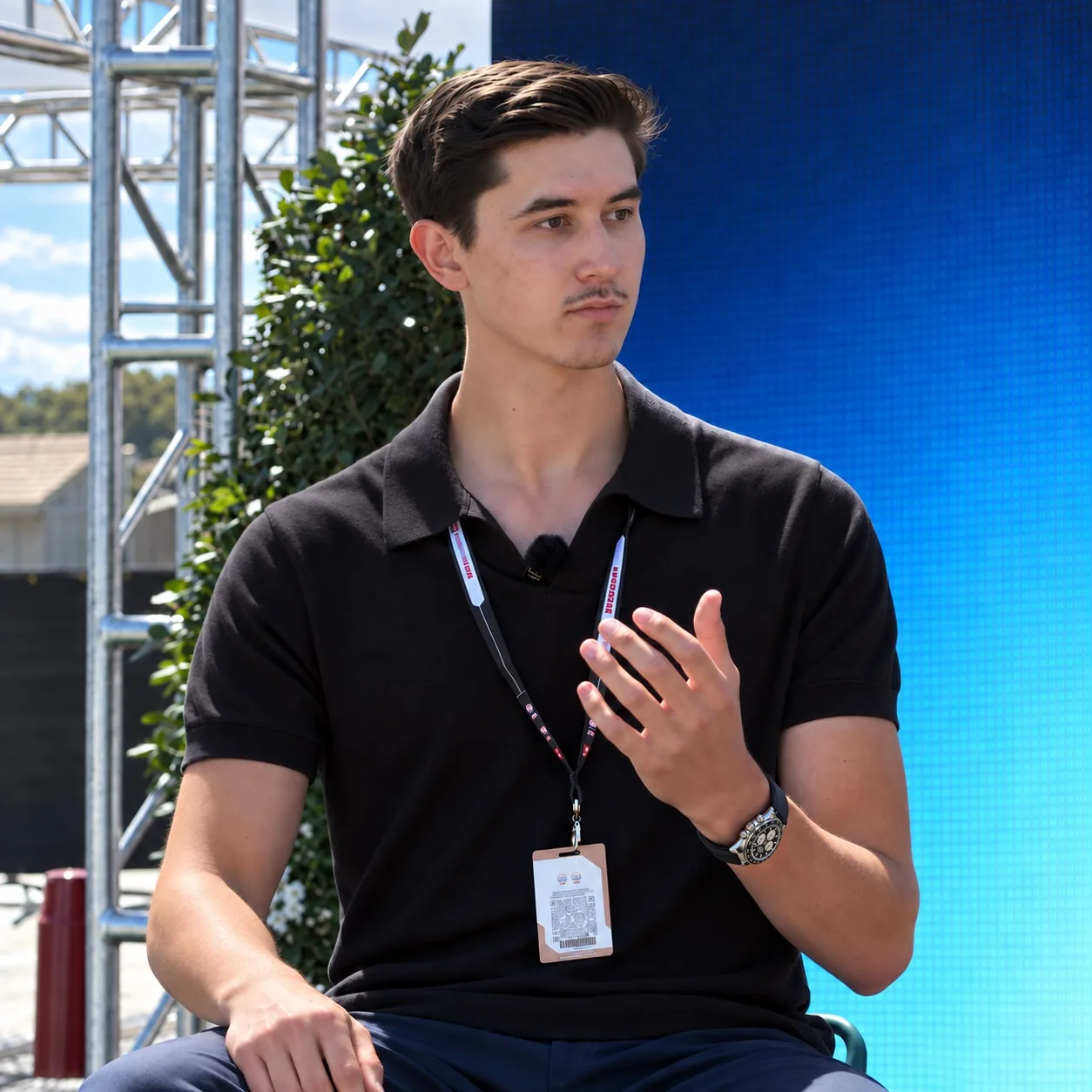
A team introduces three drivers with the same questions, the same edit and the same caption. Everyone is visible, but a new viewer has little reason to remember one person differently from another. The problem is not the shared team identity. It is that the stories reveal almost nothing about the individuals.
Keep the team's visual and factual standards consistent while giving each driver a different question to answer. Build those questions from what the driver actually notices, explains and experiences. A team can become easier to recognise when the people inside it become easier to distinguish.
Separate the team's story from the driver's perspective
The team account might explain how a programme prepares for a circuit. A driver's account can explain what that preparation changes for them in the car. Those pieces belong together, but they should not require identical introductions or conclusions.
Write a short team-level promise first: what should a spectator understand after following this account? Then ask each driver what they can contribute to that understanding. A first season, a change of category or an ability to explain a particular task can provide direction. Confirm that the driver is comfortable with the angle before making it a recurring feature.
Use one shared subject to reveal different people
Illustrative editorial map: a fictional three-driver team is preparing for a new circuit. These are sample questions, not assigned personalities or claims about a real team.
| Account or speaker | Question for the piece | Material that makes it specific |
|---|---|---|
| Team | How are we organising preparation for a circuit none of our drivers has raced? | A permitted explanation of the preparation process and who does each task |
| Driver A | What are you trying to learn before your first run? | The driver's actual question and a permitted demonstration |
| Driver B | Which habit from your previous category might need to change? | A concrete comparison the driver can explain accurately |
| Driver C | What would tell you that your preparation worked? | An observable check, followed later by an honest reflection |
The result is a shared subject with several entrances. A viewer can understand the organisation and still develop an interest in a particular person. If two drivers give similar answers, choose different evidence or combine the answers into a genuine comparison. Do not manufacture disagreement.
Keep identities flexible
A driver who explains technical ideas well should not be confined to technical content forever. Treat an angle as a starting point, then review what other interests and experiences emerge. Avoid labels such as “the funny one” or “the serious one” becoming instructions to perform a personality.
Read the proposed script aloud with the driver. If they would never say it, revise it. Preserve their observation and phrasing while making the explanation easier to follow. A common caption style can connect the work visually without replacing everyone's voice.
Review representation without turning it into a posting contest
Keep a small record of the people featured, the story reason and the next opportunity. This makes it easier to spot a driver who appears only in result graphics or someone who has not been invited to contribute. A particular weekend may justify more attention for one story; that does not remove the need to develop the other drivers over time.
Agree separately how team content interacts with each driver's own commitments and partners. A shared team shoot is not automatic permission to publish every clip on every personal account. Make the account, purpose and relevant approvals clear before commissioning the piece.
For individual positioning, use the driver personal-brand guide. To assign capture and editing responsibilities, use the team media handoff guide. Bring your roster and current content to a Turn One team discussion to develop a connected plan that still leaves room for each person.