
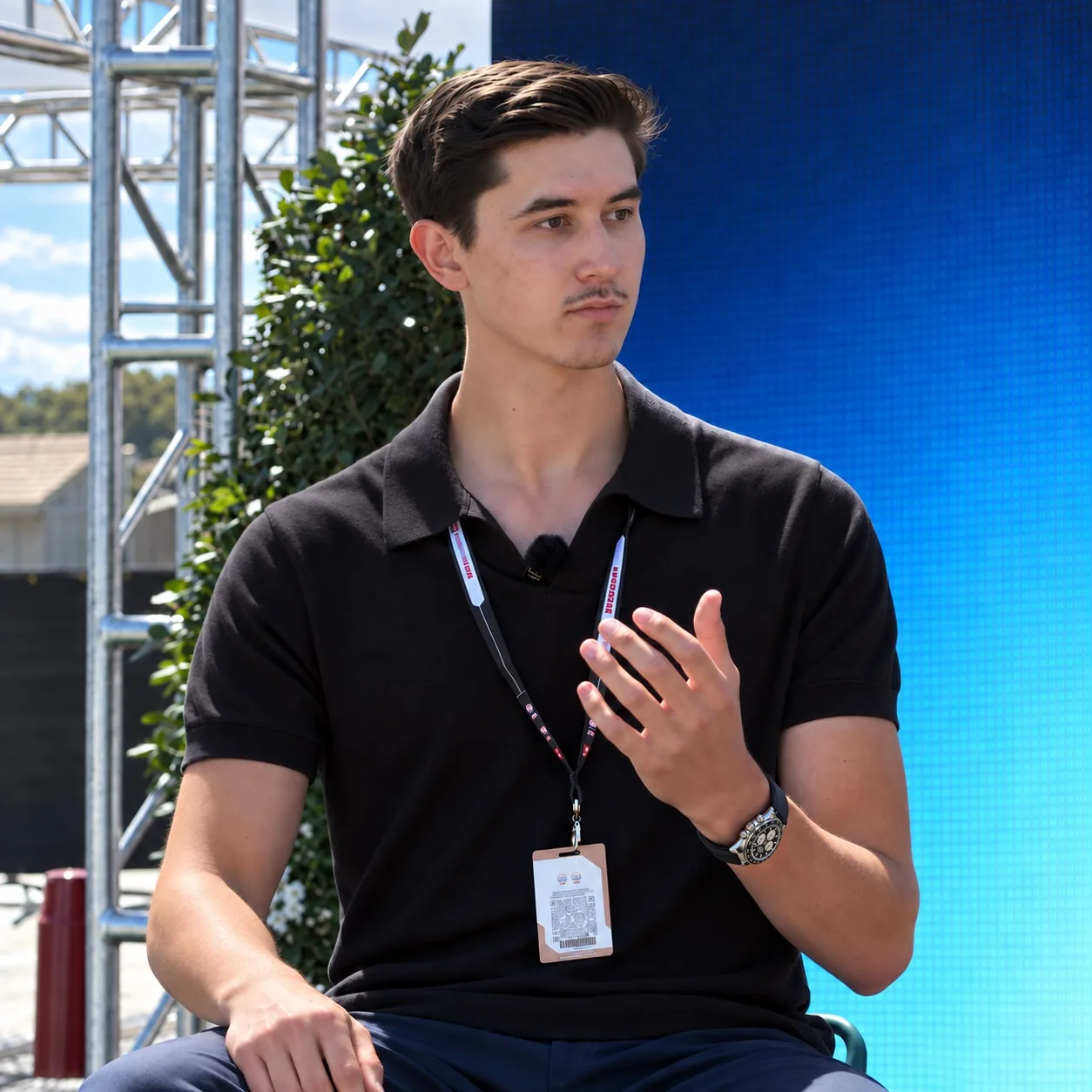
LN4 Fusion has a partner talking about audience fit before its planned first racing campaign. That makes the FinanceBuzz announcement useful reading for a team preparing a commercial offer: it connects a named buyer, a stated audience interest and a set of visible assets.
This is an analysis of public announcements reviewed on October 15, 2026. The announced relationship is evidence that an agreement exists. It is not evidence of a particular fee, sales return or audience result.
Start with the buyer's stated reason
In its September 17 announcement, LN4 Fusion says FinanceBuzz agreed a partnership covering 2027 and 2028. The listed branding includes the car, racewear, team kit, garage and transporter. FinanceBuzz chief executive Greg Van Horn describes a fit between the businesses and the opportunity to develop an audience around the next generation of motorsport.
That is a buyer's publicly stated rationale, carried in the team's announcement. It does not establish every factor behind the decision. Neither the commercial price nor measured business outcomes are disclosed there.
The wider offer includes access and experiences
LN4 Fusion's partnership page presents broadcast and social visibility alongside experiences such as paddock access and driver meetings. It also displays championship-level audience figures. Those figures provide promotional context for the racing environment; they should not be relabelled as audience delivery already achieved by the new team.
The team's September 2 launch announcement identifies Lando Norris as a co-founder and describes a racing debut planned for 2027. Its confirmed programmes include Italian F4, Formula Regional Europe and FIA F3; future F2 participation is described through an application process. The ambition of the commercial presentation should therefore be read alongside the specific programme status.
Translate the structure, not the scale
For a smaller team, the useful question is not how to imitate the size of that offer. It is how to connect the audience you can credibly describe with something a particular business wants to buy. A programme with a different profile needs its own evidence and its own deliverable scope.
Illustrative preparation exercise: a team considering a technical product partner might organise its proposal into the following three parts. This is an original planning example, not a description of FinanceBuzz's campaign or a claim about a Turn One client.
| Part of the proposal | What to establish | What remains separate |
|---|---|---|
| Audience fit | Who watches the team's content, using available dated analytics and relevant examples | A hoped-for audience is not an already measured one |
| Creative idea | A truthful explanation or demonstration the team can produce | An interesting concept is not guaranteed commercial performance |
| Purchase | Files, posts, review, usage and any experiences actually included | Rights or appearances outside the agreed scope |
Use the exercise to find what is missing before the buyer asks. If audience information is limited, describe that limitation and show the relevant work you can evidence. If a future event or guest experience is not secured, keep it conditional. A confident offer can still be precise about what has not happened.
Keep ambition and evidence readable together
A new programme necessarily talks about a future it intends to build. The reader should be able to tell which statements describe current assets, which describe agreed activity and which describe an ambition. This distinction matters when a proposal moves beyond the person who first heard the pitch.
One practical check is to underline every future-tense promise in your own proposal. Beside each, identify the owner, dependency and evidence that makes it credible. Remove or qualify a promise you cannot explain. Then check that historical audience figures retain their source and period.
The FinanceBuzz announcement makes a specific audience rationale visible; it does not provide a universal sponsorship formula. Use that distinction when developing your own offer. The sponsorship deliverables guide turns the proposed purchase into concrete decisions. Turn One for teams explains the content work that can sit around that preparation.