
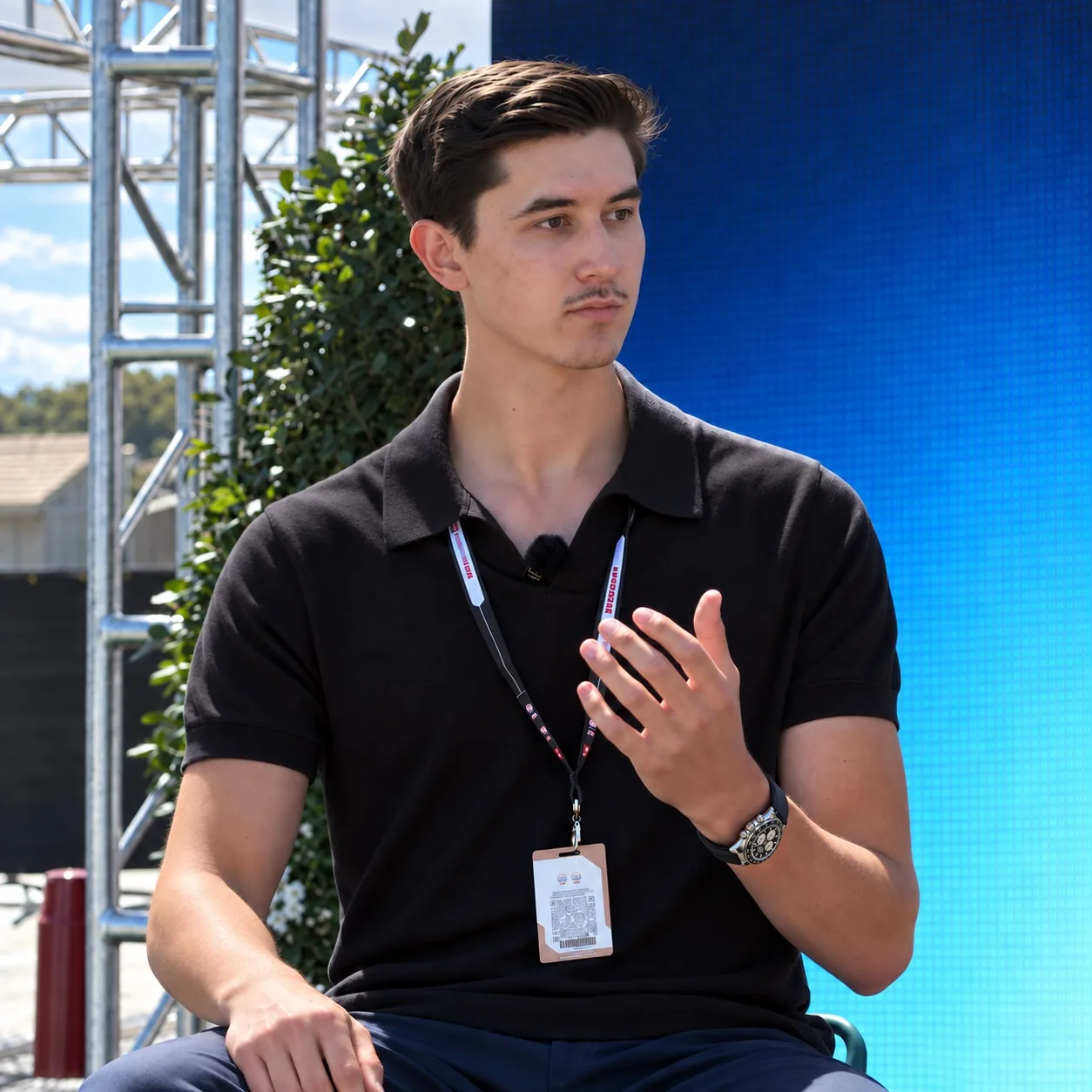
The championship publishes a strong driver feature. The featured driver's team wants to share it, but cannot find the original file, does not know the photographer's credit and is unsure whether it can cut a shorter version. The work exists. Its next use has not been planned.
Build a release pack for the people who are meant to distribute the finished story. Give them the approved material, its factual context and the permitted uses in one place. This is a different task from collecting footage: it begins after the championship has selected, edited and cleared a piece.
Decide what each account should contribute
A championship account can introduce why a contest matters across the field. A driver's account can add their first-hand perspective. A team can explain the preparation behind that performance. Agree the useful role of each account instead of asking everyone to paste the same caption.
Not every recipient needs a new edit. Sometimes a direct link to the official post is enough. Supply additional files when there is a clear editorial reason and the relevant permissions allow them. Distribution should extend the story, not create work simply to increase a count of posts.
Prepare a release pack around one finished piece
Illustrative release pack: a series has completed a permitted interview about a driver's first race in the category. This example describes an editorial handoff, not a platform feature or a real championship policy.
| Item | What the recipient receives | Why it matters |
|---|---|---|
| Approved media | Clearly named final interview; an agreed shorter extract if needed | The recipient can identify what is ready to use |
| Context | Speaker, event, recording date and verified racing facts | An older recording is not mistaken for a new result |
| Credit and use note | Required credit, permitted accounts and any restrictions on recutting or paid promotion | File access is not confused with unrestricted permission |
| Publication note | Official link, release time if relevant and suggested account-specific angle | The driver can add context without contradicting the series |
| Correction contact | A named editorial owner and current version identifier | Changes reach people who received the original |
Keep the pack compact. A folder containing many exports with similar names is not a finished handoff. Put the current file and the release note together, and clearly separate superseded versions.
Offer a starting point for the caption
A useful driver prompt might be: “What did this first race teach you that you could not learn in testing?” The team might introduce the same feature through the preparation it describes. The series can connect the interview to the broader rookie field. These are illustrative angles, not statements to publish without an answer.
Provide factual wording that must remain accurate, such as a name or event designation, separately from optional caption ideas. Leave the person room to speak naturally. Avoid putting a first-person reaction in a driver's mouth because it would make the campaign more consistent.
Resolve changes after release
If a factual error appears, identify every recipient of that version. Send the corrected file or text, explain the exact change and ask account owners to confirm the action needed on their own posts. Replacing a file in a folder does not establish that someone who already downloaded it has seen the correction.
Distinguish a factual correction from a later sporting development. A new classification may require an update; it does not necessarily mean the original interview was inaccurate when recorded. Keep the event and publication context visible.
Evaluate actual use
Track which recipients received the pack and which public links they return. Separate delivery of an asset from publication and separate publication from measured audience response. Adding the followers of every receiving account is not evidence of how many different people saw the story.
If files go unused, ask whether the format, timing or story was wrong for that account. Improve the next release before expanding it. The driver submissions guide covers the earlier collection stage; the between-rounds guide covers story selection. For a workflow connecting those stages to finished distribution, explore Turn One for championships.