Blog / Social Media Strategy for Racing Drivers: The 2026 Playbook
SOCIAL MEDIA FOR RACING DRIVERS

Social Media Strategy for Racing Drivers: The 2026 Playbook

The complete playbook for racing drivers: what to post, when, and why. 6-7 reels/week system that's grown 100+ drivers' followings by millions.

Social Media Strategy for Racing Drivers: The 2026 Playbook
Nick Lambert
Nick Lambert
CEO, Turn One · April 10, 2026 · 11 min read

Social Media Strategy for Racing Drivers: The 2026 Playbook

Your Instagram looks like a race calendar. That's it.

You post onboard footage. Maybe a photo from the podium. A screenshot of your fastest lap. Then nothing for two weeks until the next race. And you wonder why your follower count stalls at 5K while your teammate with half your pace crosses 100K.

Here's the truth: most racing drivers treat social media like a highlight reel. Post when you've done something special. Stay quiet the rest of the time. Congratulations—you've just built a feed that nobody follows.

The drivers who've gone from 400 followers to 162K in 12 months (Jack Speth), or 400 to 70K in four months (Conor Grant), aren't doing anything revolutionary. They're following a system. A posting cadence. A content formula. And they're treating it like their job—because it is.

This is the playbook. Not theory. Not what some social media guru sold them. What actually works for racing drivers in 2026.

Why Your Current Strategy Is Failing

Let's be direct: race recaps and highlight reels are commodity content.

Every driver posts them. Every team posts them. The algorithm sees it as noise. And the people who matter most—sponsors, potential partners, team owners—don't care about your onboard lap. They see those videos everywhere.

What they care about is you. Your story. Your process. Your personality. The thing that separates you from the 50 other drivers competing for the same sponsorship money.

When Preston Lambert went from 1K to 340K followers, it wasn't because he posted better race footage than anyone else. It was because he went on camera and told his story. What he was thinking. Why he made the decisions he made. How he was funding his career. People connected with that. Teams connected with that. Sponsors saw the engagement and realized: this kid has an audience. This kid can move the needle for our brand.

Same with Austin Jurs. 800 followers to 300K in 15 months. He's getting 40 million views per month. Five brand deals. That's not happening because of onboard footage. It's happening because he's posting content that makes people stop scrolling.

The content formula is simple. But it requires consistency. And it requires understanding exactly what you're building every time you hit record.

The Content Formula That Works

Every piece of content you create should follow this structure:

Hook (0-3 seconds)

You have three seconds to stop the scroll. Literally. The algorithm measures when people stop watching your video. If they're gone by second three, the whole thing tanks.

The hook isn't subtle. It's not clever. It's direct.

"I just got offered a $25K sponsorship deal." "This one mistake cost me $100K in sponsorship money." "Most drivers are making this error and don't even know it." "I got rejected by my dream team. Here's what I learned."

Notice: these aren't about your latest race result. They're about you. Your story. Your mindset. Your business.

The hook tells people: this is worth your 15 seconds.

Interest Peak (3-15 seconds)

You've stopped the scroll. Now you validate the hook. Give them just enough to want to keep watching.

"So I get this message from a brand I've been talking to. And they say they're ready to commit $25K for the season. But there's a catch..."

You've created curiosity. You've made a promise: if you keep watching, you'll understand the catch. The story continues.

Don't answer the question yet. Make them lean in.

Body (15-50 seconds)

Now you deliver on the promise. You explain the hook and the catch. You tell the story. You give them the information they came for.

Keep it real. Keep it specific. If you're talking about a sponsorship deal, tell them what the deal was, what you had to do, what it meant for your season. Numbers. Details. Specifics.

Generic content gets forgotten in 24 hours. Specific content—with real names, real numbers, real stakes—gets saved, shared, revisited.

Resolution and CTA (50-60 seconds)

End with clarity. Tell them what to do next.

"This taught me that building an audience isn't about racing. It's about showing your story. And if you want to know exactly how to build your audience so you can land sponsorships, I'm posting the framework I used in my next video."

That's your CTA. You're not asking them to buy something. You're telling them what's coming next. You're building habit. You're training them to come back.

The best CTA creates curiosity. It makes them check back tomorrow.

Real Results
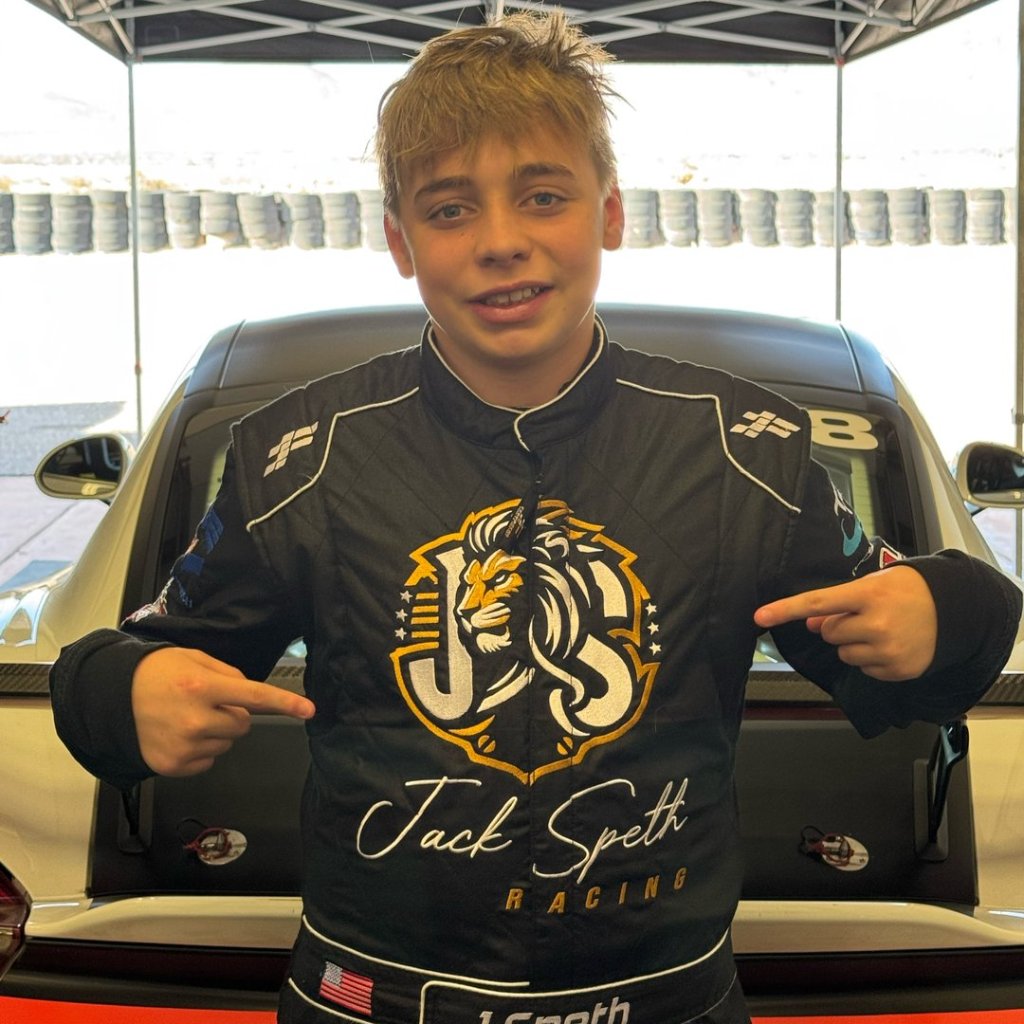
Jack Speth
F4
Jack Speth
400 → 162K followers
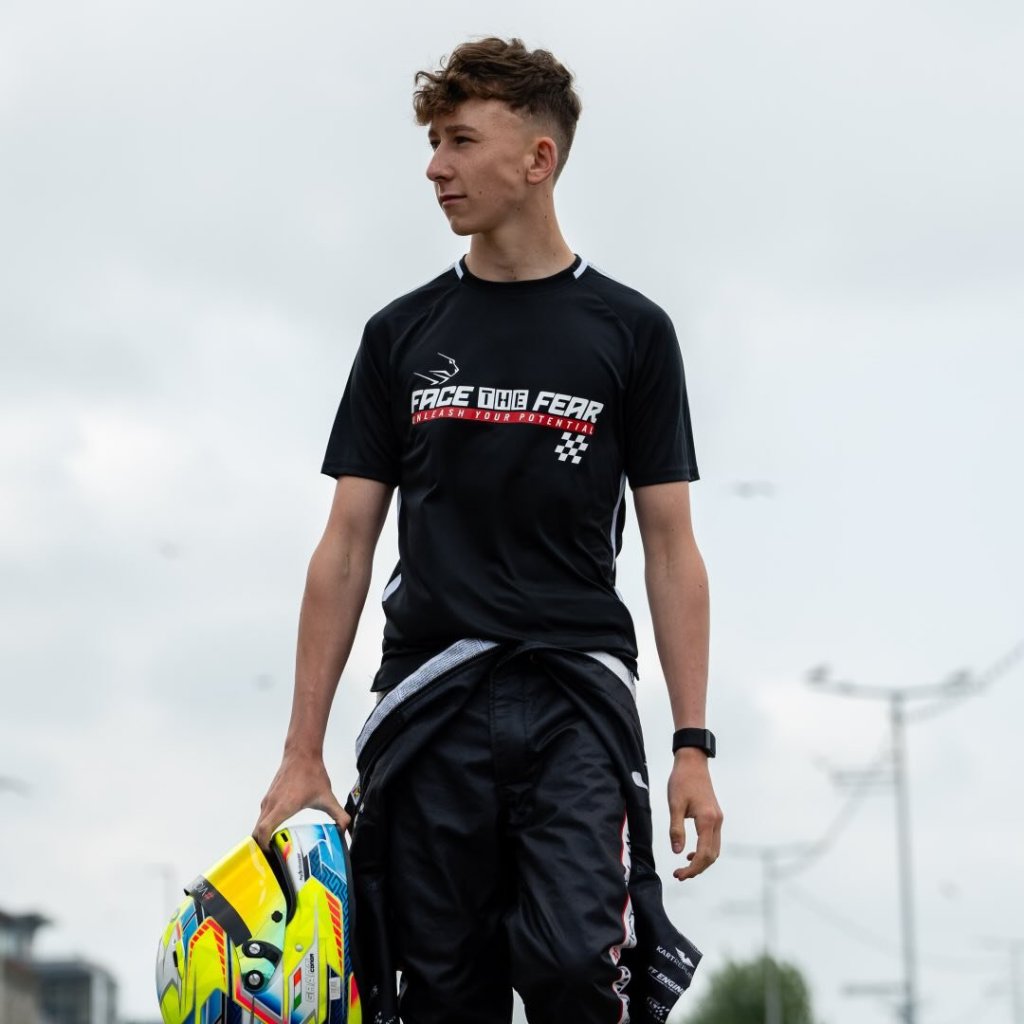
Conor Grant
Road to Indy
Conor Grant
400 → 70K in 4 months

The Weekly System: 6-7 Reels, 45 Minutes

Here's what works in 2026. Not theory. What's actually scaling drivers right now.

Monday: Talking Head #1 (Personal)

On camera, you talking directly to the lens. No on-track footage. No fancy editing. Just you.

The topic: something from your week. A decision you made. A lesson you learned. Something your competitors don't talk about.

45 seconds. Hook → Interest Peak → Body → CTA.

Example: "I turned down a sponsorship deal this week. Here's why." Then you explain why the deal didn't align with your brand. Why you're being selective. What you're looking for instead.

This isn't flashy. It's human.

Tuesday: Talking Head #2 (Performance/Strategy)

Same format, different angle. This time, it's about racing.

But not a recap. Not "amazing race today." Something specific.

"My engineer showed me data from the weekend that completely changed how I'm approaching tire strategy. Here's what I learned in the first lap versus the third stint."

People are fascinated by the process. The thinking behind the driving. The small details that separate winners from everyone else.

Wednesday: Response Video

You're responding to something someone else posted. Another driver. A team. An influencer. A common misconception about racing sponsorships.

"I saw someone say drivers should post every day. Here's why that's wrong." Then you explain the data, the cadence that actually works, why quality beats quantity.

Response videos get more engagement. You're tapping into someone else's audience. You're creating conversation.

Keep it respectful. You're not attacking anyone. You're sharing a perspective that contradicts what they said.

Thursday: Reaction Video

This is looser. You're reacting to something entertaining, interesting, or controversial in motorsport.

New regulations. A funny moment from another driver's content. A controversial take on your series.

You're being human here. You're entertaining. You're letting personality show.

Don't overdo the reactions. But this gives your account variety. It shows you're engaged with the community, not just selling yourself.

Friday: Interview or Collaboration

This is the biggest lift, but it's worth it.

You're interviewing a teammate, a mechanic, a sponsor, another driver, your engineer—someone with an interesting perspective.

The format: three questions. Five minutes total.

"What's the biggest mistake you see young drivers make?" "How do you structure sponsorship deals?" "What's changed about the sport in the last two years?"

Interview content performs incredibly well. It's social. It brings another voice to your platform. It gives your audience something fresh.

Saturday: Carousel Post (LinkedIn or Instagram Feed)

One carousel. 8-10 slides. No video.

This is your "long form" content. The deep dive.

Topic: something big. A season breakdown. A sponsorship strategy guide. How to approach an engineer. The business side of racing that most drivers never talk about.

Carousels get saved. They get shared. People forward them to friends.

Make them valuable. Make them specific. Make them worth the scroll.

Sunday: Sunday Content (Flexible)

Could be another talking head. Could be behind-the-scenes footage from your week. Could be a compilation of the week's highlights.

Sunday is the flexibility day. You're responding to what performed best during the week. You're testing new formats. You're keeping things fresh.
The Recording System: 45 Minutes Per Week

This is the breakthrough. Most drivers think creating content is a part-time job. It's not. It's efficient.

Here's exactly how it works:

Setup (5 minutes) Ring light. Phone or camera. White background or wherever you are (garage, motorhome, home office). No studio needed.

Batch Record (35 minutes) You batch record all your talking heads for the week.

Monday's talking head. Two takes. Next. Tuesday's talking head. Two takes. Next. Response video idea. Two takes. Interview questions prepared. Record them all.

You're not switching context. You're not redoing your hair and makeup seven times. You hit record, speak clearly, answer the question in under a minute. Move on.

35 minutes. You've recorded all your content for the week.

Post-Production and Captions (5 minutes) Hand this off. Or use templates. Quick caption, hook in the first line, call-to-action at the end. Post it.

That's it. 45 minutes.

Now, if you're just starting: yes, you'll spend more time. You'll be figuring out your angle. Your voice. What resonates. But once you've done this 10 times, 20 times, you fall into a rhythm. The talking heads flow. The ideas come faster.

Preston Lambert was doing this in his motorhome between sessions. Jack Speth was recording between school and his F4 commitments. You have 45 minutes a week. Everyone does.

Platform Priority: Where to Post

Instagram (Primary)

This is where racing sponsorships happen. This is where teams, sponsors, and partners look first.

6-7 pieces per week. Reels are primary. Carousel on Saturday. Stories for behind-the-scenes.

You're building a brand here. Consistency matters more than virality.

YouTube (Secondary)

Longer-form content. Vlogs. Full interviews. Breakdowns of your week. Season reviews.

One video per week. 8-15 minutes.

YouTube algorithm rewards consistency and watch time. If you're posting, people are more likely to see it because YouTube pushes your channel to your existing subscribers every time you upload.

Don't neglect this. Some drivers are getting more sponsorship value from YouTube than Instagram because the platform rewards depth.

TikTok (Tertiary)

Shorter, snappier. More personality. More dance, more humor, more personality.

2-3 pieces per week. Repurpose your Instagram content, but cut it tighter. TikTok viewers have shorter attention spans than Instagram.

LinkedIn (Optional, But Powerful)

If you're in IndyCar, F1, or high-level motorsport: post on LinkedIn.

Sponsors are on LinkedIn. Team principals are on LinkedIn. This is where business conversations happen.

Post your carousel content here. Share your insights on sponsorships, team dynamics, the business of racing.

Marcus Ericsson posts on LinkedIn and gets sponsorship inquiries from it. Not because he's IndyCar famous. Because he's talking business to a business audience.

What Gets You 40M Views Per Month

Max Mokarem, F4 rookie, posted one video that got 30 million views. Then another. Now he's at 300K followers and sponsorship teams are reaching out unsolicited.

What's the pattern?

His content is personal. It's specific. It's different.

Most F4 drivers post: "Best weekend! Amazing car, amazing team, let's go!"

Max posts: "I spent $40K on this car. Here's what I learned about money in motorsport at 16 years old."

That gets attention. That creates conversation. That goes viral.

Virality in 2026 isn't random. It's:

Authenticity + Specificity + Controversy (Light)

Authentic: it's really you, really your story, really your perspective. Specific: numbers, names, real details. Not generics. Controversial (light): you're saying something that challenges the norm. Something not everyone agrees with. Something that creates conversation.

"Most drivers are posting the wrong content." "Here's why team sponsorships fail." "Nobody talks about the financial side of racing."

These spark conversation. These create shares. These make people tag their friends.

Austin Jurs gets 40 million views per month because he's posting authentic content about his journey. His struggles. His wins. His business decisions.

That's the formula.

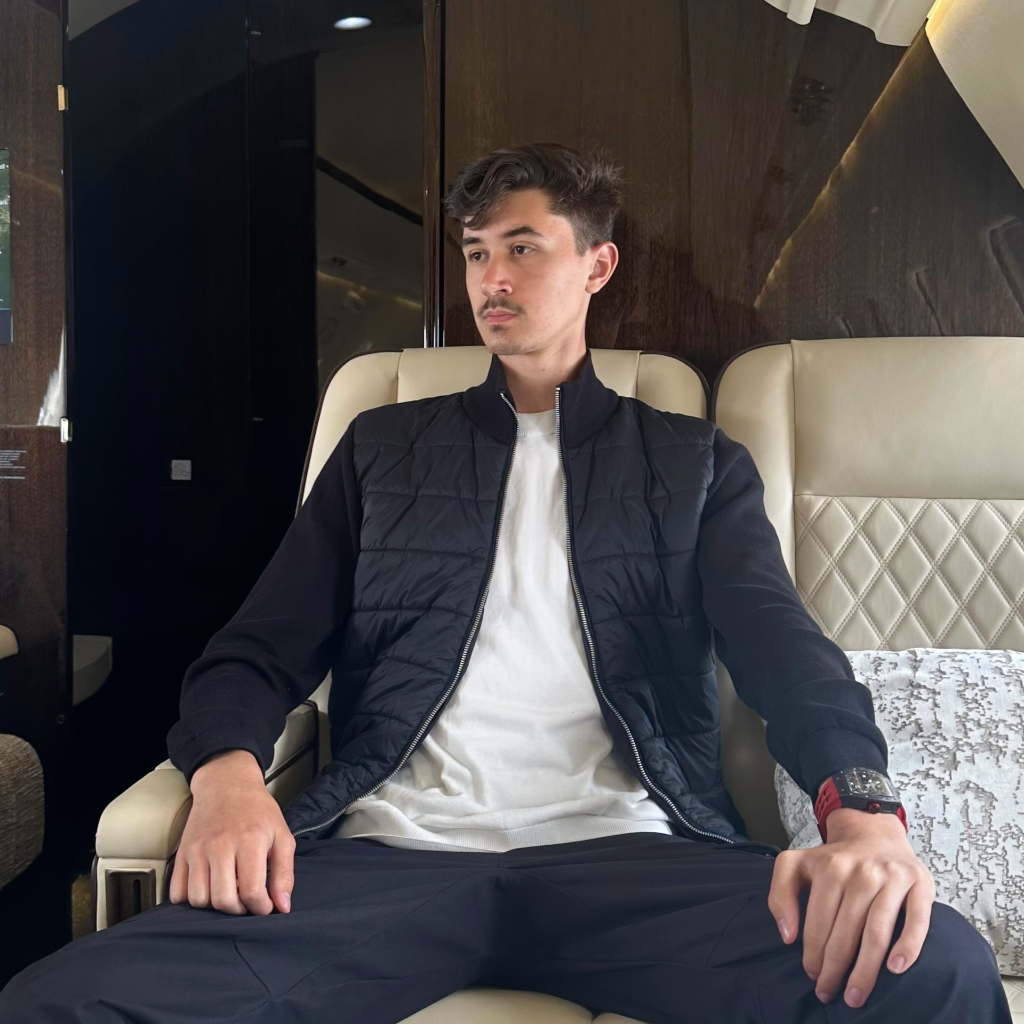
Real results — Max Mokarem, F4
Max Mokarem before
Before
→
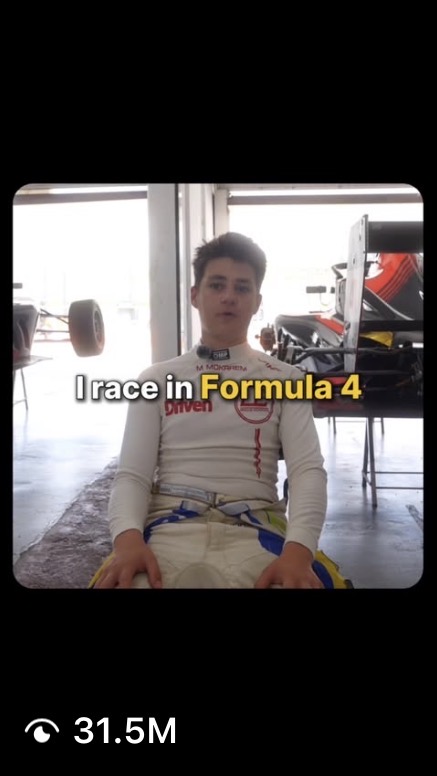
Max Mokarem after
After
Max Mokarem — 300K followers from one viral video

Consistency Beats Perfection

Here's what stops most drivers:

They wait for the perfect moment. The perfect video quality. The perfect story.

They record something, watch it back, decide it's not good enough, delete it.

They go two months without posting. Then post four videos in a week.

Consistency is more powerful than perfection. The algorithm rewards regular posting. Your audience expects to see you on a schedule.

Post at the same time. Post on the same days. Post even when you don't feel like it.

Jack Speth went from 400 followers to 162K in 12 months because he posted consistently. 6-7 times a week. Every week. Rain or shine. Race weekend or off week.

That consistency compounds.

Platform Algorithms Favor Three Things

If you understand nothing else, understand this:

1. Watch Time How long people watch your video. The longer, the better the signal. Two-minute videos get more distribution than 30-second videos, all else equal.

2. Engagement Saves, shares, comments, likes. In that order. A save is worth 10x a like. A share is worth 20x a like. Comments are worth 5x.

If someone saves your video, they're telling the algorithm: "This is valuable. Show this to more people like me."

That's why your CTA matters. "Save this if you're serious about sponsorships." That one line can 10x your reach.

3. Consistency Regular posting. The algorithm learns your schedule. It prepares to show your content. If you post every Tuesday at 9am, the algorithm gets ready to push it.

If you post randomly, it treats you randomly.

Master these three things and your organic reach scales.

The One Thing Everyone Gets Wrong

Most drivers think social media is about racing.

It's not. It's about you.

Your journey. Your story. Your insights. Your personality. The thing that makes you different.

The drivers who've hit 100K+, the ones getting five-figure sponsorship deals: they're not the ones with the best onboard footage.

They're the ones who've made their audience care about them.

Preston at 340K didn't get there by posting better lap data. He got there by talking about funding his career, his mindset, his decisions.

Austin at 300K didn't get there by posting better GT4 footage. He got there by being relatable, authentic, and consistent.

The algorithm doesn't care about your lap times. Your audience does. Your sponsors do.

Post like you're building a personal brand, not a racing highlight reel.

That's it.

FAQ

Keep Reading

Get Your Custom Content Playbook

Apply to work with the team behind 25 billion views.

Apply to Work With Us →

Frequently Asked Questions

6-7 times per week minimum. Our drivers post 3 talking heads, 1 response, 1 reaction, 1 interview, and a Sunday carousel.
You don't post more during race weekends. You post less. Most drivers batch-record in the week before or after a busy period, then post during races with pre-scheduled content. If you're too busy to record three 60-second videos, you're not managing your time. The drivers scaling fastest are the ones finding 45 minutes, not the ones claiming they're "too busy." Carve it out.
Look at your last week. What decision did you make? What did you learn? What surprised you? What confused you? What did a teammate do differently? What would young drivers benefit from knowing? Your life contains 50+ content ideas. You just haven't been asked to notice them. Start writing them down. By next week, you'll have more ideas than you can film.
Not yet. You need to record the content yourself. Your face. Your voice. Your authenticity. The best social media manager in the world can't replicate that. Once you've hit 50K followers and you have a clear formula, then consider hiring someone to edit, caption, and post. But in the early phase, you do it. You'll learn what resonates. You'll find your voice. You'll be faster.
Instagram. Sponsors look at Instagram first. Follower count, engagement rate, content quality. They spend 30 seconds on your page. If it looks active, professional, and authentic, they reach out. YouTube and TikTok are secondary, but they drive total views and credibility. LinkedIn is underrated if you're in higher-level motorsport. But Instagram is your front door.
6-7 Reels per week, 1 carousel per week. That's the proven formula. Reels get more reach. Feed posts get more saves and longevity. Combine both. Some weeks you might add Stories, but Stories are secondary to Reels. They don't drive algorithmic reach. Focus on Reels.
Real engagement starts at 10K. Real sponsorship interest starts at 30K. But sponsors care more about engagement rate than follower count. A driver with 20K followers and 8% engagement rate beats a driver with 100K followers and 2% engagement. Start optimizing for engagement now, not later.
Turn One

All testimonials are real but do not represent typical results. Client outcomes will vary according to their commitment, market conditions, and countless other variables. The results shared are by our most dedicated clients and are not indicative of typical or average results. No guarantee of income or success is expressly made or implied.

© 2026 Turn One. All rights reserved.