Blog / The Racing Driver Career Path: From Karting to Professional Motorsport
RACING DRIVER CAREER PATH

The Racing Driver Career Path: From Karting to Professional Motorsport

The real career path from karting to professional racing. Costs at every level, why talent alone fails, and how content changes everything.

The Racing Driver Career Path: From Karting to Professional Motorsport
Nick Lambert
Nick Lambert
CEO, Turn One ยท April 10, 2026 ยท 11 min read

The Racing Driver Career Path: From Karting to Professional Motorsport

There's a career path everyone thinks exists in racing. Win races. Get noticed. Get funded.

It's beautiful. It's simple. It's completely wrong.

Here's the path that actually works in 2026: Build audience. Attract sponsors. Fund your career.

Talent still matters. But talent alone hasn't been enough for five years. The drivers funding their careers now? They're not just fast. They're strategic.

I've worked with 100+ drivers across karting, F4, F3, F2, IndyCar, NASCAR, GT3, GT4, and Road to Indy. The ones who fully funded or substantially funded their careers? They understood this.

Let me walk you through the actual ladder. The costs. The reality. And how the marketing side works at every level.

The Actual Motorsport Ladder

Level 1: Karting ($20K-$50K/year)

Karting is where everyone starts. It's also where most families never think about sponsorship.

That's a mistake.

The cost is real but manageable. The attention is fragmented. The opportunity is massive.

At this level, you're racing 15-20 weekends per year, depending on the series. Costs break down like this: - Kart: $3,000-$10,000 (new or used) - Maintenance, gas, transport: $5,000-$15,000 - Entry fees: $10,000-$20,000 - Equipment: $2,000-$5,000

The families who understand that building an audience at karting level gives them leverage later? They're already positioning for F4.

Cole Medeiros built to 20,000 followers and 6.5M monthly views as a karter. By the time F4 came around, he had sponsor infrastructure already in place.

Most karters are thinking: "I'll worry about sponsors when I'm in cars."

That's why most karters end up stopping at karting. No funding. No path forward.

Level 2: F4 ($60K-$150K/year)

This is where the ladder gets real.

F4 is the entry point to car racing. It's where talent gets separated from people who are just racing karts. It's also where costs spike.

Entry fee for a season: $40K-$80K Fuel, maintenance, transport: $10K-$30K Equipment: $3K-$5K Travel, hotel, food: $10K-$30K

Total: $60K-$150K depending on the series.

That's a lot of money. And this is still technically a "junior" series.

At this level, 2-3 drivers fully fund through sponsorship. The rest are parent-funded or heavily subsidized.

But here's what's different: at F4, audience and content matter more, not less.

Jack Speth is the proof. He grew from 400 followers to 162,000 in 12 months as an F4 rookie. That's a 405x growth multiple.

How? Not because he won every race. Because he was strategic about content, transparency, and engagement.

Conor Grant grew from 400 to 70,000 in roughly 4 months on the Road to Indy ladder. Same strategy.

At F4, if you come in with existing audience (like drivers who built at karting), you're positioned to: - Lock sponsor deals faster - Negotiate better rates - Offset more of your budget

If you start from zero, you're playing catch-up.

Level 3: F3 ($150K-$400K/year)

This is where the game changes completely.

Entry fee: $100K-$200K (depending on calendar) Fuel, maintenance, transport: $20K-$50K Equipment: $5K-$10K Travel, accommodations: $20K-$100K

Total: $150K-$400K per season.

At F3, you're racing a full European calendar or substantial national calendar. The costs are sustained. The pressure is real.

This is also where fully-funded drivers exist.

Preston Lambert went from 1,000 followers to 340,000 followers in F3. He was fully funded for two consecutive seasons.

How? Not because he was the fastest driver. Because he understood that in F3, driver value = audience value + sponsorship value.

He built the audience. Locked the sponsors. Used both to negotiate drives that covered the full budget.

Other drivers at F3? They're finding their own budget or their parents are paying $200K+/year out of pocket.

The gap between drivers with audience/sponsorship and those without is enormous.

Level 4: F2 ($400K-$1M/year)

This is where the stakes get serious.

Entry fee: $300K-$600K per season Fuel, maintenance, fuel, data, engineering: $50K-$150K Travel, logistics: $50K-$100K Support staff, coaching: $30K-$100K

Total: $400K-$1M+ per season.

At F2, most drivers are supported by: - National federations - Wealthy backers - Significant sponsorship - Or all three

This is the threshold where talent alone isn't enough anymore. You need political backing, financial backing, or a unique sponsorship story.

Level 5: IndyCar/NASCAR/International Series ($500K-$5M+/year)

This is professional racing. The budgets are massive. The sponsorship value is equally massive.

Entry into these series typically requires: - A proven track record in a junior series - Significant sponsorship backing ($1M+) - National federation support - Or a combination of all three

At this level, you're not just a driver. You're a brand. Your value is measured in audience, sponsorship potential, and marketability.
The Cost Reality: Why Most Drivers Stop

Let me be direct: the financial barrier is the primary reason drivers stop.

Karting to F4 is manageable for middle-class families. It's $20K-$50K per year. Painful, but possible.

F4 to F3 is a 2-3x jump. Suddenly you need $150K-$400K per season. That's inaccessible for most families.

The drivers who make it past F3? They're either: 1. Exceptionally fast (top 2-3% of drivers) 2. Exceptionally wealthy 3. Exceptionally good at sponsorship

Most drivers don't fall into categories 1 or 2. Which means category 3 is the differentiator.

That's where the audience and marketing side comes in.

100+
Drivers managed
$5M+
Sponsorship generated
25B+
Views

Why Talent Alone Isn't Enough Anymore

This is the uncomfortable truth: raw speed doesn't fund careers anymore.

I've worked with drivers who are top-5 in their series in terms of pace. They can't find sponsors.

I've worked with drivers who are top-20 in pace. They've built an audience of 100K+, locked six-figure sponsorship deals, and fully funded their careers.

The difference? Strategy.

Here's why sponsorship has become the primary funding mechanism:

1. Sponsors care about reach, not lap times.

A tire manufacturer doesn't care if you're 0.2 seconds faster than the guy in third place. They care if you can reach 1M people monthly with content.

2. There's only so much series income.

Prize money in junior series is minimal. F3 might pay $10K-$20K to a front-runner. That's not funding a career.

3. Sponsorship scales exponentially.

Win races and you're known within racing. Build an audience and you're known outside racing. Sponsors want the latter because there's more of it.

4. Audience proves repeatability.

When a driver can show "I grew from 5K to 50K followers," sponsors understand they can produce results. They can scale. That's worth funding.

A win proves you were fast that weekend. An audience proves you can build and sustain something.

The Real Career Path (What Actually Works)

Here's the framework that works at every level:

Karting - Goal: 10K-20K followers, 3M+ monthly impressions - How: 6-7 reels/week, 45 min/week content time - Sponsor value: $5K-$25K/season in deals - Budget offset: 10-25% - Timeline: 12-18 months - Example: Cole Medeiros (800โ†’20K, 6.5M monthly)

F4 - Goal: 30K-100K followers, 5M-15M monthly impressions - How: Content, engagement, transparency about racing - Sponsor value: $25K-$100K+ in deals - Budget offset: 20-50% - Timeline: 12 months - Example: Jack Speth (400โ†’162K, ร—405 growth)

F3 - Goal: 100K-500K followers, 20M+ monthly impressions - How: Audience built from previous levels, strategic content evolution - Sponsor value: $100K-$500K+ in deals - Budget offset: 30-100% - Timeline: Season or two - Example: Preston Lambert (1Kโ†’340K, fully funded two seasons)

F2 and above - Goal: 500K+ followers, 50M+ monthly impressions - How: Professional content team, sponsorship operations, brand partnerships - Sponsor value: $500K-$5M+ in deals - Budget offset: 50-100%+ - Timeline: 1-2 years - Example: Louis Foster (grew from regional to IndyCar with audience)

Real Results
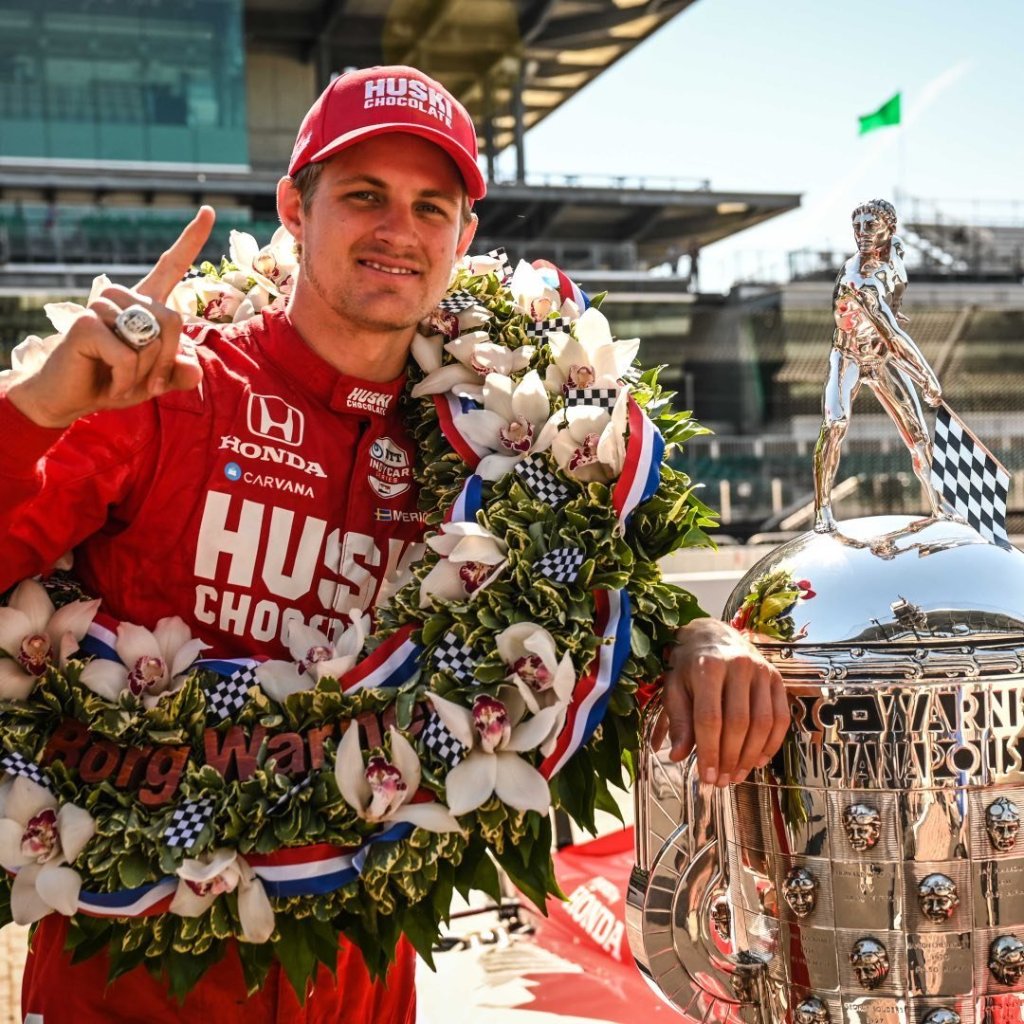
Marcus Ericsson
IndyCar
Marcus Ericsson
250K โ†’ 290K followers
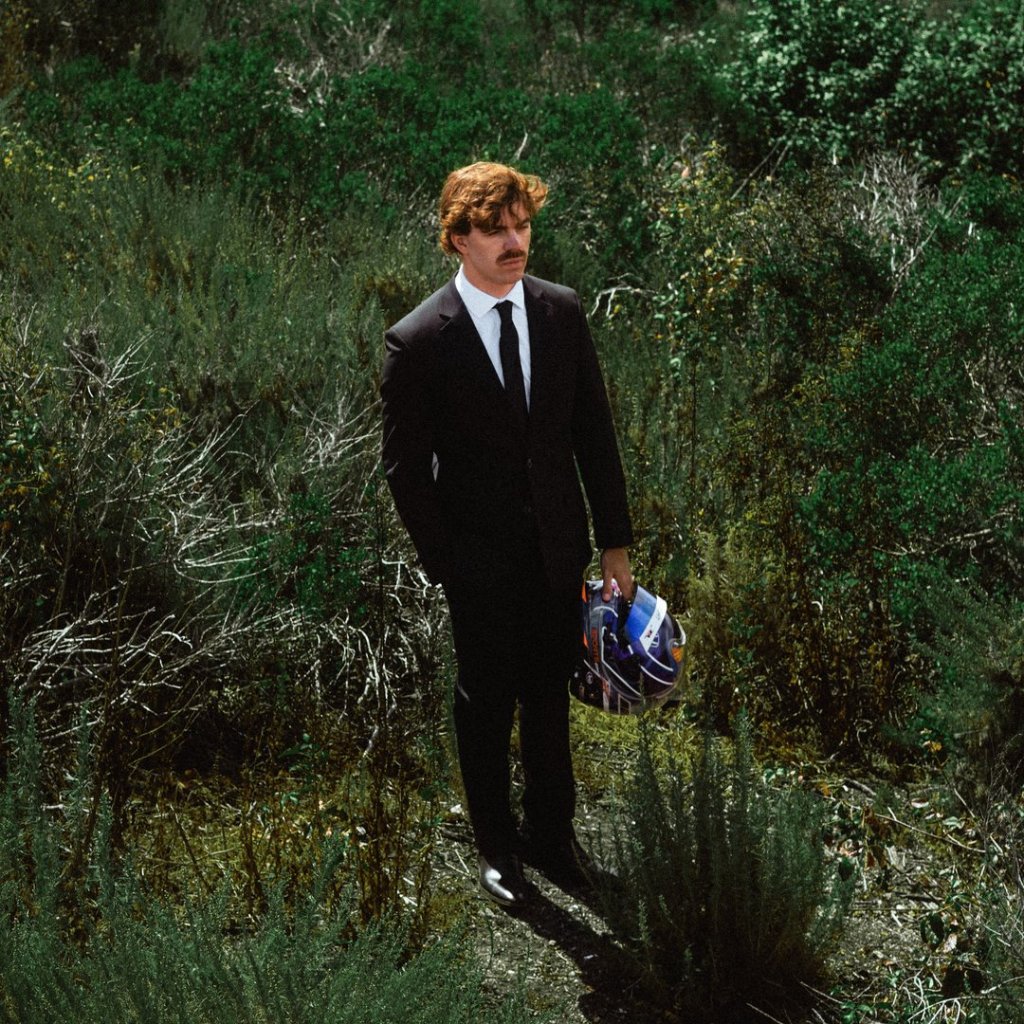
Louis Foster
IndyCar
Louis Foster
9K โ†’ 70K followers

Why Most Drivers Fail (And How to Avoid It)

The failure points are consistent:

Failure Point 1: Waiting Until Series X to Build Audience

Drivers think, "I'll build my brand when I'm in F3."

By then, you're competing with 40 other F3 drivers. You're also paying a massive budget. Building audience while simultaneously funding the series is almost impossible.

The fix: Start at karting. Build while costs are low and attention is fragmented.

Failure Point 2: Not Understanding Sponsorship Infrastructure

Drivers approach sponsorships haphazardly. A local business here. A random brand there. No system.

Real sponsorship is a machine. Tiers of partners. Roles and values for each partner. A contact list. A pitch system. A follow-up cadence.

The drivers who funded their careers? They had systems.

The fix: Treat sponsorship like a business operation, not a side thing.

Failure Point 3: Content Without Strategy

Drivers post videos. Sometimes. When they remember. No cadence. No formula. No measurement.

This doesn't work.

The fix: 6-7 reels per week. Consistent formula. Track what works. Double down.

Failure Point 4: Quitting Too Early

Building audience takes time. Most drivers quit at month 2 or 3 when they haven't gone viral.

Going viral isn't the goal. Consistency is.

The fix: Commit to 6 months minimum. 24-26 weeks of consistent posting. If you're not seeing growth by then, refine the strategy and continue.

Failure Point 5: Not Believing It Matters

Some drivers think, "I'll just focus on racing. Sponsorship will figure itself out."

It won't.

The ones who funded their careers believed that the audience and sponsorship side mattered as much as lap time. Because it does.

The fix: Treat the business side like part of your sport. Because it is.

The Different Paths at Each Level

Here's how the strategy changes based on where you are:

If You're In Karting: - Goal: Build to 15K-20K followers - Focus: Authenticity, consistency, engagement - Content type: Onboards, behind-the-scenes, honest reactions, challenges - Cadence: 6-7 reels per week - Timeline: 12-18 months - Result: Move to F4 with audience, sponsor relationships, and leverage

If You're In F4: - Goal: Build from your baseline to 100K+ followers - Focus: Unique personality, transparency about the learning curve, growth narrative - Content type: The onboards still work, but add: thoughts on competitors, season arcs, personal challenges, sponsorship integrations - Cadence: 6-7 reels per week (can be higher with team support) - Timeline: 12-18 months to 100K - Result: Move to F3 with fundable platform

If You're In F3: - Goal: Grow from 100K to 300K-500K+ followers - Focus: Professional narrative, series-level strategy, sponsor storytelling - Content type: Everything from lower series, plus: technical analysis, European travel, high-stakes race narratives, professional partnerships - Cadence: 6-7+ reels per week (with team support) - Timeline: 12-24 months - Result: Platform for F2 or professional sponsorship

If You're In F2 and Above: - Goal: 500K+ followers, professional content team - Focus: Brand building, narrative arc, international reach - Content type: Professional production, behind-the-scenes at high level, team and sponsors, international audiences - Cadence: Daily content or close - Timeline: Ongoing - Result: Professional career, seven-figure sponsorship

The Numbers That Prove This Works

Let me give you the data:

100+ drivers worked with us. 3M+ total followers generated across all of them.

But here's the breakdown:

  • Cole Medeiros (Karting): 800โ†’20K followers, 6.5M views/month
  • Jack Speth (F4): 400โ†’162K followers, ร—405 growth in 12 months
  • Conor Grant (Road to Indy): 400โ†’70K in ~4 months
  • Thomas Nordquist (Road to Indy): 600โ†’70K in 6 months
  • Preston Lambert (F3): 1Kโ†’340K followers, fully funded two seasons, $8K/post rate
  • Austin Jurs (GT4): 800โ†’300K in 15 months, 40M views/month, $2.5K/post, 5 brand deals
  • Emely De Heus (F1 Academy & GT3): 40Kโ†’107K followers
  • Cristian Cantu (F3): 6Kโ†’150K followers, 8M views/month
  • Max Mokarem (F4): 300K followers from one viral video, 30M views on single piece

These aren't outliers. This is the system working across different series, age groups, regions, and backgrounds.

The common thread? All of them used the same framework.

The Series You Can Actually Break Into

Here's something important: not every series is equally fundable through sponsorship.

Easiest to fund through sponsorship: - Road to Indy - F4 (European and North American) - GT3/GT4 - Karting

Why? These series have lower single-sponsor costs. A $50K deal meaningfully offsets budget. Sponsors exist at local, regional, and national tiers.

Harder to fund through sponsorship: - F3 (European) - F2

Why? These series require $200K-$600K per season. No single sponsor covers that. You need a portfolio of sponsors, federal backing, or both. The barrier is higher. But drivers with $500K-$1M in sponsorship do exist.

Funded differently: - IndyCar, NASCAR, F1, other pro series

Why? At this level, you typically have backing from an existing source before entry. This might be team ownership, national federation support, or proven sponsorship history.

My advice? If you want to fund a career through audience and sponsorship, pick Road to Indy, F4, GT, or start at karting and work your way up.

These are the series where the math actually works and the sponsor infrastructure exists.

The Path Forward

If you're serious about racing, here's the real career ladder:

Years 1-2 (Karting) - Build followers to 10K-20K - Learn content consistency - Lock first sponsor deals (Tier 1 local) - Total cost: $20K-$50K per year

Years 3-4 (F4) - Move to cars with existing audience - Grow to 50K-150K followers - Upgrade to Tier 2 regional sponsors - Offset 20-50% of budget - Total cost: $30K-$100K out of pocket

Years 5-6 (F3 or Road to Indy) - Grow to 200K+ followers - Lock Tier 3 national sponsorship - Offset 40-80% of budget - Total cost: $30K-$150K out of pocket

Years 7+ (Pro racing or higher series) - Audience and sponsorship fully offset costs - Or fund transition to pro series - Can be self-sustaining with proper partnership

This isn't fantasy. Drivers in this program are doing it.

The difference between drivers who fund careers and those who don't? The ones who fund theirs started earlier, stayed consistent longer, and treated the business side like a sport.

That's it.


FAQ

Keep Reading

Fund Your Next Step on the Ladder

Whether you're in karting or Formula 3, the system works.

Apply to Work With Us โ†’

Frequently Asked Questions

Karting costs $30K-100K/year, F4 is $200K-400K, F3 is $500K-1.5M, and F2 can exceed $2M per season.
No. Jack Speth grew from 400 to 162,000 followers as an F4 rookie. Conor Grant went from 400 to 70,000 in 4 months. It's not too late. It's just harder and will take more energy. But the sooner you start, the better your position by F3.
No. Wins help, but they're not required. Jack Speth, Conor Grant, and others didn't rely on winning. They relied on consistent, strategic content. Transparency. Engagement. Those are more important than results.
Road to Indy, F4, and GT series are most fundable through sponsorship. F3 is possible but requires higher audience (300K+) to meaningfully offset costs. Avoid F2 unless you have significant backing from outside sources.
Depends on your numbers. As a rule: 1 million impressions per month = $1,000-$2,000/month in sponsorship value. Cole at 6.5M monthly views should be getting $6,500-$13,000/month. Jack at 162K followers and growing should command $2,000-$5,000/month. The numbers should inform the rate, not guessing.
The best drivers at this aren't naturally charismatic. They're strategic. Cole Medeiros isn't famous for being an entertainer. He's known for consistent, authentic content. Lean into your actual personality, not trying to be someone you're not. That works better.
Preston Lambert fully funded two F3 seasons. Austin Jurs funded significant GT4 career. It's real. But it requires audience (100K+), sponsor infrastructure (multiple tiers of deals), and timing. Not every driver will fully fund. But 30-80% offset is realistic for drivers who execute properly.
Turn One

All testimonials are real but do not represent typical results. Client outcomes will vary according to their commitment, market conditions, and countless other variables. The results shared are by our most dedicated clients and are not indicative of typical or average results. No guarantee of income or success is expressly made or implied.

ยฉ 2026 Turn One. All rights reserved.