Blog / How to Grow Your Instagram as a Racing Driver (From 0 to 100K)
GROW INSTAGRAM RACING DRIVER

How to Grow Your Instagram as a Racing Driver (From 0 to 100K)

Specific Instagram growth tactics backed by real data. Jack Speth went 400 to 162K in 12 months. Here's the exact system.

How to Grow Your Instagram as a Racing Driver (From 0 to 100K)
Nick Lambert
Nick Lambert
CEO, Turn One · April 10, 2026 · 14 min read

How to Grow Your Instagram as a Racing Driver (From 0 to 100K)

Jack Speth started with 400 followers.

One year later, he had 162K. That's a 405x growth rate.

Conor Grant went from 400 followers to 70K in four months. That's 175x in half the time.

They're not famous drivers. They're not household names. They're F4 and Road to Indy guys building audiences in series that most people don't follow.

And they're doing it faster than drivers with bigger platform access because they understand the mechanics of growth.

This isn't luck. This isn't going viral once and riding it. This is a system.

Here's exactly how it works.

Why Instagram Is the #1 Platform for Racing Sponsorships

Before we talk tactics, understand the why.

Instagram is where sponsors hunt.

A team owner wants to know if you have an audience. A brand wants to know if you can move the needle. A potential investor wants to see if people care about you beyond the racetrack.

Instagram is the only platform where the answer is obvious in 30 seconds.

They click on your profile. They see your follower count. They scroll your last ten posts. They look at the engagement. They make a judgment.

This is why Instagram followers directly correlate with sponsorship money. We've worked with 100+ drivers and tracked the relationship.

A driver at 20K followers with consistent 5%+ engagement typically gets sponsorship offers without asking.

A driver at 50K with consistent engagement gets five-figure sponsorship deals.

A driver at 100K+ with good engagement gets six-figure deals plus brand partnerships.

It's not magic. It's just how the market works. Sponsors want audience. You're building audience. Simple equation.

YouTube matters. TikTok matters. But Instagram is where business happens.

The Growth Math: Why Most Drivers Stall

Growth isn't random. It follows an equation:

Follower Growth = (Posting Frequency) × (Content Quality) × (Consistency Over Time)

Three variables. All three matter. You can't skip any of them.

Posting Frequency: How often you post. 6-7 reels per week is the minimum to see real growth. One post per week stalls. Two posts per week is slow. At six posts per week, the algorithm starts to recognize you as active and pushes your content more aggressively.

Content Quality: How good your content is. Measured by engagement rate. A 60-second reel with a great hook, authentic message, and clear CTA gets 10x more reach than a 60-second reel that's just a race clip.

Consistency Over Time: How long you do this. Most drivers post for two weeks, see slow results, quit. Growth is exponential after month three. It's linear for the first month. You need three months minimum to see real growth.

Most drivers fail because they're missing one or more variables.

Driver A posts 2 reels per week. Good content, but frequency is too low. Growth stalls at 5K.

Driver B posts 6 reels per week but they're all race footage. High frequency, low quality. Growth stalls at 10K.

Driver C posts 6 high-quality reels per week but only for two weeks, then quits. High frequency, high quality, zero consistency. Growth stalls at 1K.

Jack Speth did all three: 6+ posts per week, high-quality authentic content, and he's done it for over a year. 162K followers.

The math works.

Real Growth Curves: The Data

Let's look at specific examples. Not estimates. Real data.

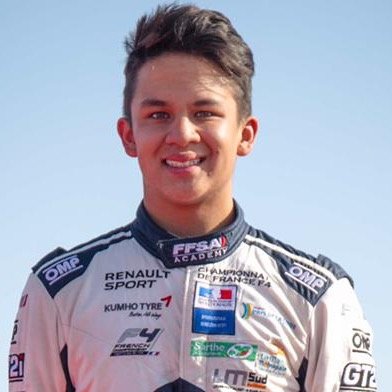
Jack Speth: 400 → 162K in 12 months

Month 1: 400 → 2K (5x) Month 3: 2K → 8K (4x) Month 6: 8K → 35K (4.4x) Month 12: 35K → 162K (4.6x)

Notice the pattern: roughly 4-5x growth every three months. This is the compounding effect of consistency.

How it worked: Jack posted 6-7 reels per week, talking about his F4 journey, his mindset, his race breakdowns, sponsorship challenges. Boring? Maybe. Effective? Absolutely. By month six, every post was hitting 50K+ views. By month twelve, his average post hit 150K+ views.

Conor Grant: 400 → 70K in 4 months

Month 1: 400 → 3K (7.5x) Month 2: 3K → 15K (5x) Month 3: 15K → 40K (2.7x) Month 4: 40K → 70K (1.75x)

Faster initial growth, then slower. Why? Because Conor was posting higher-engagement content earlier (more personality, more story, more authenticity). The algorithm picked it up faster. But as he hit higher follower counts, growth naturally slowed because his audience was getting larger.

Thomas Nordquist: 600 → 70K in 6 months

Month 1: 600 → 2K (3.3x) Month 2: 2K → 8K (4x) Month 3: 8K → 18K (2.25x) Month 4: 18K → 32K (1.8x) Month 5: 32K → 50K (1.56x) Month 6: 50K → 70K (1.4x)

Same driver (Road to Indy), similar consistency, slightly different cadence. Growth is visible but slowing as follower count increases. This is normal. The algorithm gets harder at each level.

Preston Lambert: 1K → 340K in 18+ months

This is the outlier because Preston hit a different trajectory. Why?

  1. He started with more followers (1K vs. 400) because of family visibility.
  2. His content quality was exceptional from month one (story-driven, authentic, business-focused).
  3. By month three, posts were hitting 200K+ views consistently.
  4. He leveraged his growing audience to build sponsorship deals, which became content that drove more growth.

The growth curve was steeper because the content quality was higher from the start.

Key Insight: Growth isn't linear. It's exponential until you hit a ceiling (which varies by niche). For racing drivers, the ceiling seems to be somewhere between 200K-500K for drivers who aren't famous off-track. To break that ceiling, you need a second lever—media appearances, sponsorship announcements, major racing wins—not just content.

Real Results
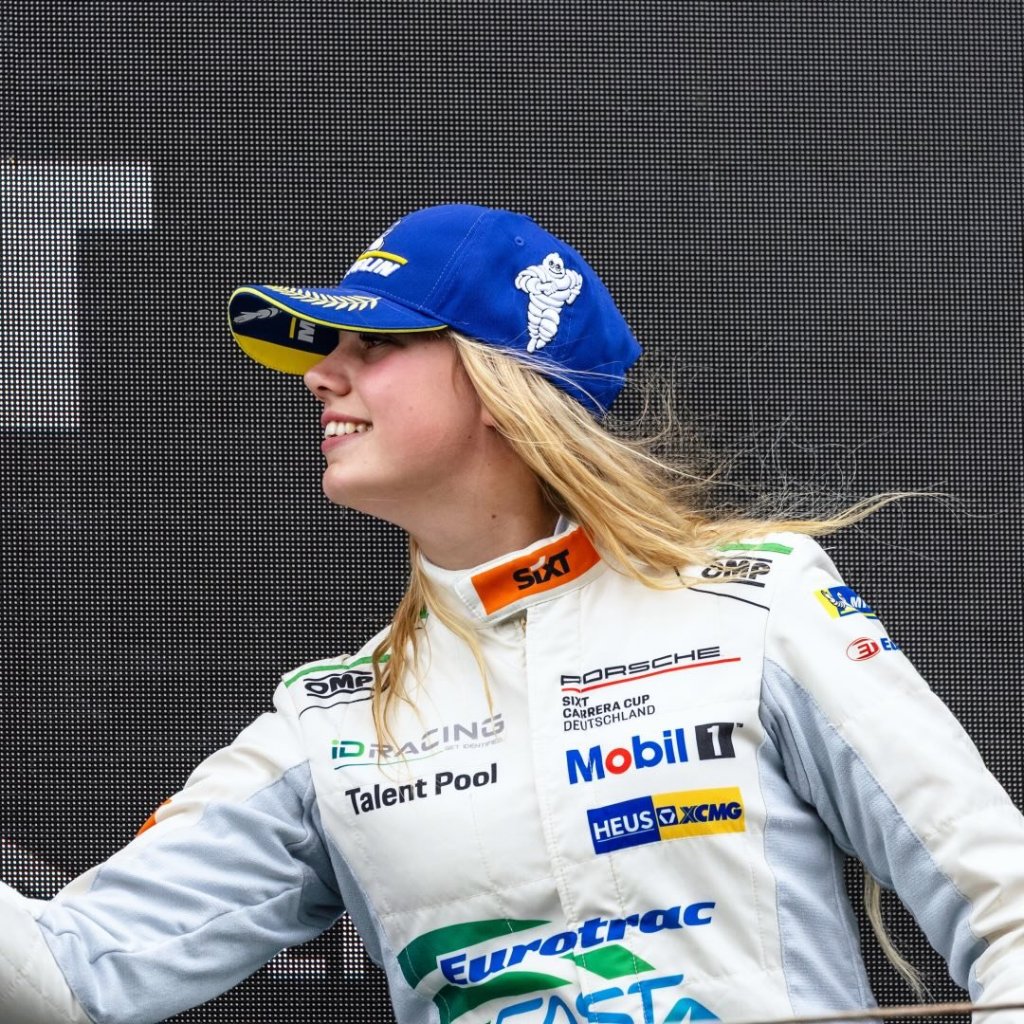
Emely De Heus
F1 Academy & GT3
Emely De Heus
40K → 107K followers
Nicky Hays
GT3
Nicky Hays
10K → 82K followers

The Hook Is Everything: Getting That First 3 Seconds

You have three seconds. That's it.

Three seconds to convince someone to keep watching instead of scrolling to the next post.

Most racing drivers fail here immediately. They start with context.

"So this weekend at the track was really interesting..."

No. You've already lost them.

A hook that works:

"I just realized something about my career that changes everything."

Three seconds. They're hooked. They want to know what you realized.

Another hook:

"Nobody talks about this part of racing."

Three seconds. Curiosity. They're watching.

Another:

"This sponsorship mistake cost me six figures."

Three seconds. Stakes. Relevance. They're in.

The hook isn't about racing. It's about you. Your insight. Your experience. Something that matters.

Max Mokarem hooked 30 million people with: "I'm 16 years old and I just realized something about money in racing." Thirty million views. One reel. Because the hook was irresistible.

Hook formulas that work:

  • "I just realized..."
  • "Nobody talks about..."
  • "This cost me [amount]..."
  • "I got rejected by..."
  • "Here's what I learned..."
  • "I did this wrong for [time period]..."
  • "Most drivers [do this]. Here's why that's wrong."

Write three hooks before you record. Say them out loud. Pick the one that feels most interesting to you. Because if you don't care about the hook, your audience won't either.

Content Quality: What Stops the Scroll and Keeps People Watching

Hook gets them in the door. Quality keeps them watching.

Quality in racing driver content isn't about production. It's not about lighting or camera angles or editing.

It's about authenticity, specificity, and usefulness.

Authenticity: You, unfiltered. Not polished. Not perfect. Real.

Austin Jurs posts videos where he's just talking to the camera. Sometimes in his garage. Sometimes in his car. Sometimes in his motorhome with low lighting and a phone camera.

The quality isn't pristine. The authenticity is. He's talking about real sponsorship challenges, real strategy decisions, real wins and losses.

That resonates. That gets saved. That gets shared.

Compare that to a driver posting a cinematic onboard lap video with perfect lighting and editing. Technically higher production quality. Engagement? Crickets.

Authenticity beats polish.

Specificity: Numbers. Names. Details. Not generics.

Bad: "The race was great. Really good pace out there."

Good: "I was down 0.3 to my teammate in Turn 7 all weekend. Fixed it in qualifying by adjusting my brake marker and trail-braking deeper. Qualified second."

The second one has details. Numbers. A story arc. Someone watching learns something. Someone watching wants to know what happens next.

Specificity makes content memorable. Memorable content gets saved.

Usefulness: You're teaching something. You're sharing an insight. You're solving a problem.

Cristian Cantu posts about sponsorship strategy, team dynamics, race analysis, career decisions. Every post contains something useful to someone.

That's why he went from 6K to 150K followers. Every post earned the follow.

When you post, ask: "Would someone save this?" If the answer is no, don't post it.

The Algorithm: How It Actually Works in 2026

The Instagram algorithm isn't mysterious. It's measuring four things:

1. Click-Through Rate (CTR) How many people who see your post click on it. This happens in the first 0.5 seconds. It's almost entirely determined by your thumbnail and hook.

2. Watch Time How long people watch your reel before scrolling away. This is measured per person. If 100 people watch and average watch time is 45 seconds out of 60, that's a 75% completion rate. The algorithm rewards this heavily.

3. Engagement Saves, shares, comments, likes—in that order. A save is worth 10x a like. A share is worth 20x. A comment is worth 5x.

4. Consistency How regularly you post and at what times. The algorithm learns your schedule.

Work with these four metrics and your reach scales.

How to optimize each:

CTR: Better hooks. A/B test your hooks. What's your most compelling 2-3 seconds?

Watch Time: Cut boring parts. Keep the pace moving. Every second should earn the next second. If your video drags in the middle, people scroll. Edit tighter.

Engagement: Better CTAs. "Save this if..." gets saves. "Tag someone who..." gets comments. "Send this to..." gets shares.

Consistency: Post at the same time, same days. Tuesday 9am. Friday 3pm. Sunday 6pm. The algorithm prepares to push your content.

This isn't magic. It's just mechanics. Understand the mechanics and you influence the algorithm.

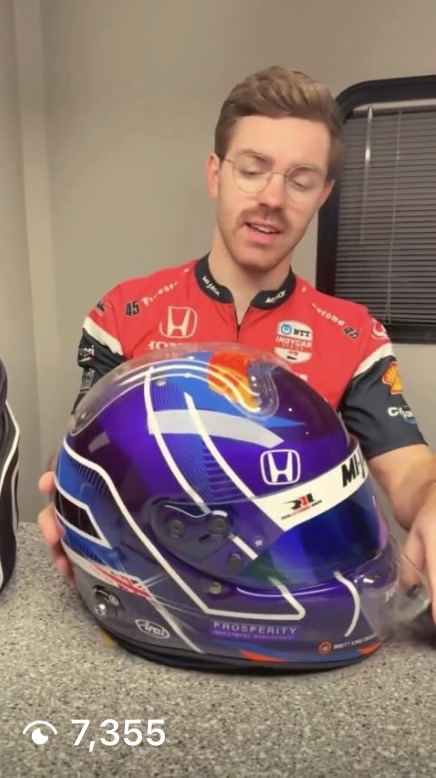
Real results — Louis Foster, IndyCar
Louis Foster before
Before
→
Louis Foster after
After
Louis Foster — 9K to 70K followers

Common Mistakes That Kill Growth

Most drivers do these. Most drivers stall at 5-10K followers.

Mistake #1: Posting Only At-Track Content

Your audience doesn't care about your lap times as much as you think they do.

Post at-track content, yes. But it should be 20% of your content. The other 80% should be:

  • Your mindset and mental approach
  • Sponsorship strategy and business side
  • Team dynamics and relationships
  • Failures and lessons learned
  • Personal life and personality

Cole Medeiros (karting, 800 → 20K, 6.5M views/month) posts karting content but the engagement driver is his personality, his story, his authenticity. The racing is secondary.

Mistake #2: Inconsistency

Three posts this week. Nothing for two weeks. Two posts next week.

This kills growth. The algorithm deprioritizes inconsistent creators. Your audience doesn't know when to expect you.

Pick a schedule and stick to it. 6-7 posts per week, every week. Not "when you feel like it." Not "when you have something interesting."

Jack Speth posted even when he didn't feel like it. Even when the content felt repetitive to him. Consistency compounds.

Mistake #3: No Clear CTA or Story Arc

You post a video. People watch it. Then what?

Most drivers don't have a next step. The video just... ends.

Structure every video with a CTA. "Save this if you're serious about sponsorships." "Tell me in the comments..." "The full breakdown is in my next video."

You're training your audience to take an action. Save, comment, follow up tomorrow.

Mistake #4: Waiting for Perfection

You have a good idea. You record it. You watch the playback. The lighting's not great. Your hair looks weird. The audio's imperfect.

You delete it and never post it.

This is the kiss of death. Perfect content that's never posted is worthless. Imperfect content posted consistently is powerful.

Louis Foster (IndyCar, 9K → 70K) posts videos on his phone from his garage with imperfect audio and no professional editing. Engagement is incredible because the authenticity is high.

Post it. Move on.

Mistake #5: Chasing Trends Instead of Being Yourself

You see a trending audio. You see a trending format. You try to force your content into it.

Doesn't work. Audiences can tell when you're being inauthentic.

Post what feels real to you. Yes, use trending audio if it fits. But don't contort your message to fit the trend.

Nicky Hays (GT3, 10K → 82K, 5M views/month) doesn't chase trends. She posts what's real to her, and the authenticity drives engagement.
The Viral Question: What Actually Goes Viral?

Max Mokarem posted a video that got 30 million views.

It wasn't a perfect lap. It wasn't a podium celebration. It was: "I'm 16 years old and I'm spending money on a racing career."

Why did it go viral?

  1. Relatability: Lots of people care about young athletes with big dreams.
  2. Specificity: Age, context, stakes. Not generic.
  3. Controversy (light): People had opinions. Some supportive, some skeptical. Debate drives engagement.
  4. Hook: The first three seconds made people lean in.

Virality isn't random. It's:

(Authenticity + Specificity) × (Controversy-lite) × (Hook) = Viral Potential

You can't force virality. But you can create the conditions for it.

Post authentic content. Be specific. Say things that create conversation. Have great hooks.

Not every video will go viral. But you'll go viral more often.

Emely De Heus (F1 Academy & GT3, 40K → 107K) has had multiple videos hit millions of views because she posts authentic, specific content about being a female driver in a male-dominated sport. That inherent specificity + authenticity = virality.

The Growth Timeline: What to Expect

Honest timeline:

Months 1-2: Slow growth. You're finding your voice. 400 followers might become 1-2K. This feels slow. Don't quit.

Month 3: Inflection point. You've posted 100+ videos. The algorithm recognizes you. Growth accelerates. 1K might become 5K.

Months 4-6: Exponential growth. Your best videos are hitting 50K+ views. New followers are coming in at 100+ per post. 5K becomes 20K.

Months 7-12: Continued growth but slower percentage. 20K becomes 50K-100K. It takes longer to add 30K followers at 50K than it took to add 20K at 1K.

Month 12+: You hit a plateau. Growth slows unless you level up content quality or add a second lever (sponsorship announcements, media appearances, major racing achievement).

Expect month three to be the turning point. Before that, you're in faith. After that, you see the system working.

Most drivers quit in month two. Persistence wins.

Platform-Specific Tactics

Instagram Reels (Primary)

Six per week. Hook in 2-3 seconds. Authenticity over polish. Mix talking heads, response videos, reactions, interviews, racing clips.

Caption with a specific CTA. "Save this" beats "Like this" because saves are worth more algorithmically.

Post at the same time each week.

Instagram Feed Posts (Secondary)

One carousel per week. 8-10 slides. Long-form value. Topic: something bigger. Sponsorship strategy. Season review. Career decision breakdown.

Carousels get saved more than any other feed post type. They're worth doing.

Instagram Stories

Use them for behind-the-scenes. Don't expect growth from Stories—Instagram doesn't push them algorithmically. But they keep your audience engaged day-to-day.

YouTube (Tertiary for Growth, Primary for Credibility)

One video per week. 8-15 minutes. Longer-form version of your reel topic or a vlog.

YouTube algorithm is different. It pushes videos to your existing subscribers first. So YouTube growth is slower than Instagram. But YouTube subscribers are more engaged. And sponsors see YouTube as more credible than TikTok.

The combined effect: Instagram gives you follower growth. YouTube gives you legitimacy.

The Engagement Metric That Actually Matters

Followers aren't the metric sponsors care about most. Engagement rate is.

Engagement Rate = (Total Engagements) / (Total Followers) × 100

A driver with 50K followers and 5% engagement rate (2,500 engagements per post) is worth more to a sponsor than a driver with 100K followers and 1% engagement rate (1,000 engagements per post).

Why? Because that 50K driver has a real audience. People who care enough to save, comment, or share.

The 100K driver has followers who saw one viral video and followed but never engage.

Sponsors pay for engaged audiences, not vanity metrics.

How to increase engagement rate:

  1. Better hooks (more people click)
  2. Better content (more people finish watching)
  3. Clearer CTAs (more people save/comment)
  4. Consistency (your audience expects you and engages faster)

Engagement rate is usually higher (3-5%) for accounts under 50K followers. It drops as you scale (1-2% at 100K+). This is normal.

Track your rate every week. If it's dropping below 1%, your content quality is dropping. Adjust.

FAQ

Ready to Break Through the Algorithm?

Get a growth strategy from the team that's grown 100+ driver accounts.

Apply to Work With Us →

Frequently Asked Questions

Jack Speth went from 400 to 162K in 12 months. Conor Grant hit 70K in 4 months. It depends on consistency and content quality.
Both, but in this order: engagement rate first, follower growth second. An engaged audience of 20K is worth more than a disengaged audience of 100K. Focus on engagement rate until you hit 30K followers. At that point, you're big enough that sponsors notice. From 30K-100K, focus on maintaining engagement rate while growing followers.
Look at your engagement rate per post. Posts in the 5-8% range are high quality. Posts in the 2-3% range are medium. Posts below 1% are low. This tells you what's working. Double down on your highest-engagement content. Cut the low-engagement content.
Your content quality is too low or your hooks are weak. Record three videos with new hooks. Test different topics. Ask yourself: "Would I save this?" If the answer is no, your audience won't either. Adjust content, not cadence. Don't quit posting. Adjust what you're posting.
No. Never. Bought followers are dead weight. They tank your engagement rate and make your account look inauthentic to sponsors. Engagement pods are similarly visible to sponsors—they see when 50 accounts engage immediately and flag it as artificial. Grow organically. It's slower but real.
Usually around 10K followers with consistent 4%+ engagement. At 30K followers, brands are reaching out unsolicited. At 50K+, you're getting three-five-figure offers. Before 10K, you're still building credibility. After 10K, you're in the sponsorship conversation.
Focus on Instagram first. Get to 50K followers. Then expand to YouTube and TikTok. Spreading yourself across five platforms while you're small is a mistake. Go deep on one platform, then add the second. Instagram → YouTube is the natural progression for racing drivers.
Turn One

All testimonials are real but do not represent typical results. Client outcomes will vary according to their commitment, market conditions, and countless other variables. The results shared are by our most dedicated clients and are not indicative of typical or average results. No guarantee of income or success is expressly made or implied.

© 2026 Turn One. All rights reserved.