Blog / How Much Does Racing Sponsorship Cost? The Real Numbers
RACING SPONSORSHIP COST

How Much Does Racing Sponsorship Cost? The Real Numbers

Real sponsorship numbers from 100+ racing drivers. Learn what sponsors actually pay, what determines your rate, and the cost of doing nothing.

How Much Does Racing Sponsorship Cost? The Real Numbers
Nick Lambert
Nick Lambert
CEO, Turn One · April 10, 2026 · 13 min read

How Much Does Racing Sponsorship Cost? The Real Numbers

You're asking the wrong question.

"How much does racing sponsorship cost?" assumes sponsorship is something you have to pay for. That's the wrong frame.

The real question is: what are you worth to a sponsor? Because that's the number that matters. Once you understand your worth, the rest of the economics make sense.

I've worked with 100+ drivers and verified $5M+ in sponsorship funding. The drivers making money aren't the ones paying for sponsorship. They're the ones who've figured out how to deliver value to sponsors and get paid for it.

Here's what I know: you can be a World Class driver breaking records and spend $200K-$500K per year out of pocket to race. Or you can be a good-not-great driver and fund 80% of your season through sponsorship.

The difference isn't talent. It's understanding the economics.

Let me break it down with real numbers.

What Sponsors Actually Pay For

Before we get to dollar amounts, let's talk about what sponsors are actually buying when they sponsor you.

They're not buying your talent. They're not buying because you're fast. They're buying:

  1. Attention - How many people see the sponsor's name when it's on your car/content?
  2. Credibility - Does your audience trust you enough that the sponsorship feels authentic?
  3. Engagement - Does your audience actually care, or are you just a vanity metric?
  4. Content - What content can the sponsor get from the partnership (videos, posts, testimonials)?

Most drivers think sponsorship is about paying your budget. Sponsors think sponsorship is about buying reach and engagement.

Once you shift that perspective, everything changes.

The Three Revenue Streams for Racing Drivers

There are three ways drivers make money from sponsorship. Understanding all three is critical because different drivers in different series use different mixes.

Revenue Stream 1: Per-Post Brand Deals

A brand (apparel company, energy drink, data service, whatever) pays you to create content featuring them.

How it works: - Sponsor: "We'll pay you $2,000 to create one reel featuring our product" - You: "Create the reel, post it, tag the sponsor, done" - Sponsor gets: one piece of content, their product featured, access to your 300K followers

Real rates: - 50K-100K followers: $500-$1,000 per post - 100K-300K followers: $1,500-$3,000 per post - 300K-500K followers: $3,000-$8,000 per post - 500K+ followers: $5,000-$15,000+ per post

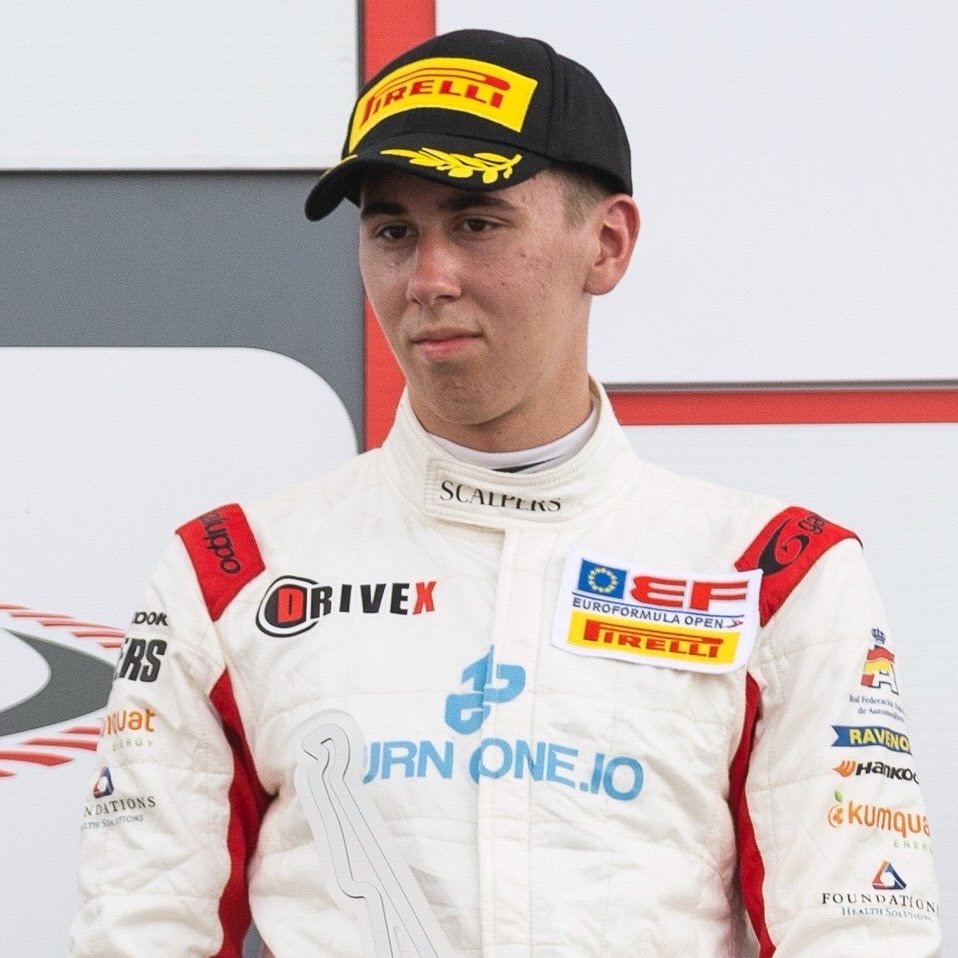
Examples from our drivers: - Preston Lambert (340K followers): $8,000 per post - Austin Jurs (300K followers, 40M monthly views): $2,500 per post - Cole Medeiros (20K followers, but 6.5M monthly views): $1,000-$1,500 per post

The engagement rate and view count matter as much as follower count. Cole gets premium rates despite fewer followers because his content is seen by 6.5M people per month.

If you're posting 6-7 reels per week and 4 of them are brand deals at $2,000 each, that's $8,000 per week or $32,000 per month or $384,000 per year.

That's a fully-funded racing season. That's prize money for competing. That's not hypothetical.

Revenue Stream 2: Season Sponsorships

A brand becomes your "official sponsor" for a season or a segment of a season.

How it works: - Sponsor: "We'll pay you $30,000 to be your official [tire supplier/fuel brand/apparel partner] for the season" - You: Wear their logo, feature them in content, give them exclusivity in that category - Sponsor gets: association with you for an entire season, featured content at least weekly, logo placement on car/gear

Real rates: - Karting: $5,000-$15,000 per season - F4: $10,000-$25,000 per season - F3: $25,000-$75,000 per season - GT/Endurance: $15,000-$50,000 per season - F2: $50,000-$150,000 per season - F1: $500,000-$10M+ (negotiated individually)

Examples: - Preston and Austin both have 2-3 season sponsors in addition to their per-post brand deals - This is recurring revenue—once signed, it covers several months of expenses automatically

Most drivers have 1-2 season sponsors (one might be apparel, one might be energy/nutrition, one might be a hardware supplier).

Revenue Stream 3: Driver Coaching and Content Services

This is emerging but it's real: drivers with credibility can make money teaching other drivers.

How it works: - You: "I'll do a 1-on-1 coaching call with drivers trying to build their brand or their career" - Rate: $200-$500 per call - You do 2-4 calls per month (8-16 hours per month) - Revenue: $1,600-$8,000 per month

This is viable if: - You have 100K+ followers - You're known for understanding the business side of racing - You can teach something (brand building, sponsorship strategy, mental training, fitness)

Preston does this. Austin does this. Some of our drivers charge $300-$500 per call and book up 3-4 months in advance.

That's pure profit—no team involvement, no racing expenses.

Real Results
Preston Lambert
F3
Preston Lambert
1K → 340K · $8K/post
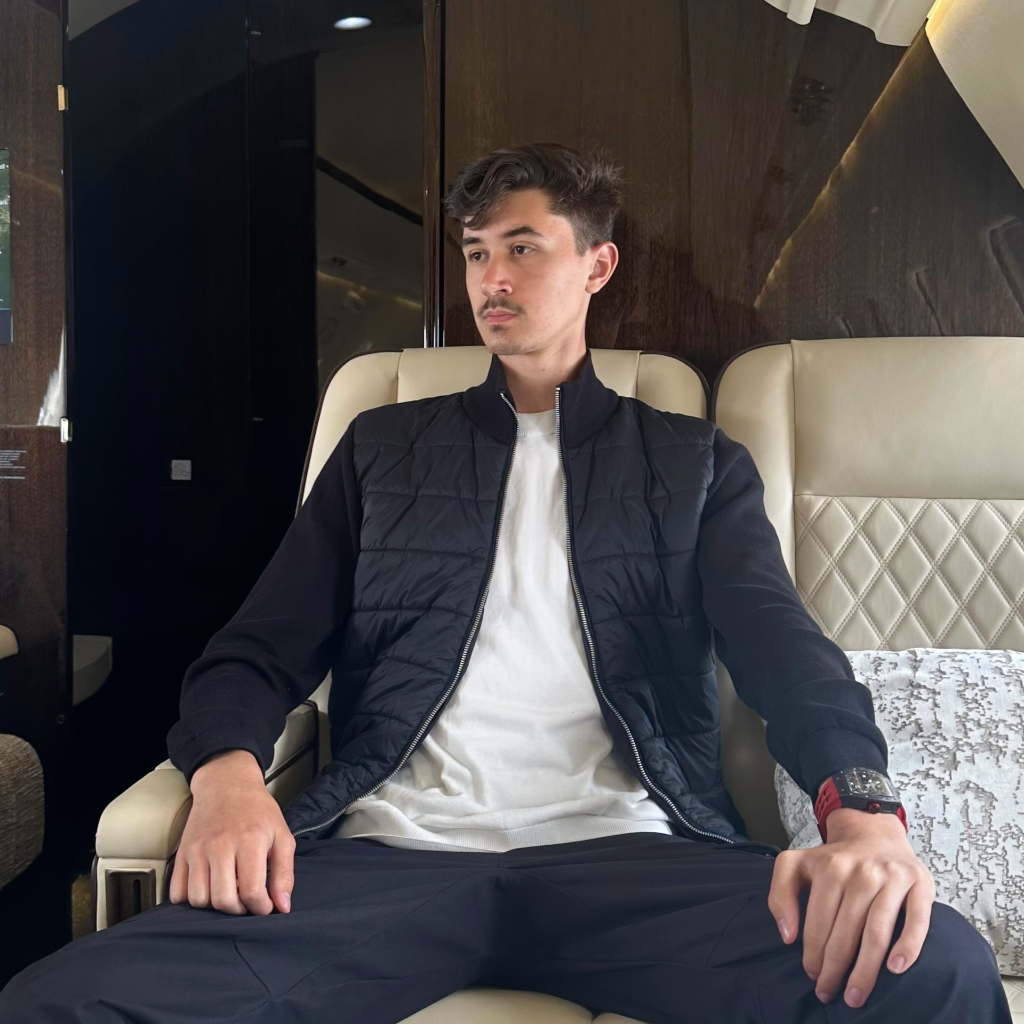
Cole Medeiros
Karting
Cole Medeiros
800 → 20K · $1K–$1.5K/post

Real Budget Scenarios: What Different Drivers Actually Earn

Let me walk you through realistic scenarios based on actual drivers we've worked with.

Scenario 1: F4 Driver with 100K Followers

Season sponsorships: - Apparel sponsor: $15,000 - Nutrition/fitness sponsor: $8,000 - Total: $23,000

Per-post brand deals: - 4 posts per week × 4 weeks × $1,200 per post = $19,200 per month - 3 months of racing season = $57,600 - Off-season months (lower posting): 2 posts/week × 8 weeks × $1,200 = $19,200 - Total for year: $76,800

Coaching/content services: - 2 calls per month × $300 per call × 12 months = $7,200

Total annual sponsorship revenue: $107,000

Racing budget for F4: ~$150,000 (including car, travel, equipment, coaching)

Out of pocket: $43,000 (instead of $150,000 without sponsorship)

ROI: The 45 minutes per week building a personal brand turned a $150K out-of-pocket expense into a $43K out-of-pocket expense. That's $107K in value.

Scenario 2: F3 Driver with 200K Followers

Season sponsorships: - Apparel: $25,000 - Data/tech company: $30,000 - Fitness/nutrition: $15,000 - Total: $70,000

Per-post brand deals: - 4 posts per week × 52 weeks × $2,500 per post = $520,000

Wait, that's not realistic. You don't do 4 paid brand deals per week year-round. More realistic: - Racing season (20 weeks): 4 posts/week × 20 weeks × $2,500 = $200,000 - Off-season (32 weeks): 2 posts/week × 32 weeks × $2,500 = $160,000 - Total: $360,000

Coaching/content services: - 3 calls per month × $400 per call × 12 months = $14,400

Total annual sponsorship revenue: $444,400

F3 budget: ~$250,000-$400,000 (depending on team/equipment)

Outcome: Fully funded, or partially funded with prize money covering the rest. Multiple drivers we work with are in this position—F3 drivers who are self-sufficient from sponsorship.

Scenario 3: GT Driver with 300K Followers (Austin Jurs Model)

Season sponsorships: - Primary sponsor (apparel/brand): $40,000 - Data/equipment partner: $20,000 - Nutrition sponsor: $12,000 - Total: $72,000

Per-post brand deals: - 4 posts per week (throughout year) × 52 weeks × $2,500 = $520,000

Coaching/content services: - 4 calls per month × $400 per call × 12 months = $19,200

Total annual sponsorship revenue: $611,200

GT racing budget: ~$80,000-$150,000 (depending on team structure)

Outcome: 100% funded, with surplus for other racing endeavors, personal development, or savings.

Scenario 4: Karting Driver with 20K Followers but High Engagement (Cole Medeiros Model)

This is the important one. Cole proves you don't need 300K followers to make real money.

Engagement metrics: - 20K followers - 6.5M views per month - 8-12% engagement rate (way above normal)

Season sponsorships: - Karting equipment manufacturer: $8,000 - Apparel: $5,000 - Nutrition: $3,000 - Total: $16,000

Per-post brand deals: - 5 posts per week × 52 weeks × $1,000 per post = $260,000

Karting budget: ~$40,000-$80,000

Out of pocket: Break-even to $20,000 surplus

Why this works: Cole's engagement is so high that sponsors pay per-post rates based on views and engagement, not follower count. His 20K followers get 6.5M impressions per month. That's a 325x multiplier. Sponsors pay for reach, not follower numbers.
The Cost Structure: What Determines Your Sponsorship Rate?

If you understand what determines your rate, you can reverse-engineer what you need to earn.

Your sponsorship rate is determined by:

  1. Follower count (weighted 30%)
  2. More followers = higher baseline rate
  3. But it's logarithmic, not linear
  4. Going from 10K to 50K is a bigger jump in rate than 200K to 250K

  5. Engagement rate (weighted 40%)

  6. This is the most important factor
  7. Engagement = (likes + comments + shares) / followers
  8. 5%+ engagement is excellent
  9. 2-3% is average
  10. Under 1% is dead weight

  11. Content quality (weighted 20%)

  12. Professional editing matters
  13. Consistency matters
  14. Authenticity matters
  15. Production value doesn't matter (Austin proved this)

  16. Niche alignment (weighted 10%)

  17. If you're a female driver and a women's apparel brand is considering you, you're worth more
  18. If you're a GT driver and a tire brand works with GT drivers, better fit
  19. Perfect alignment sometimes increases your rate by 50%

The formula: - Rate = (Followers × 0.01) + (Engagement Rate × 50) + (Content Quality Score × 100) + (Niche Bonus)

This is simplified, but it explains why: - Preston (340K followers, high engagement, excellent content) gets $8K/post - Cole (20K followers, extremely high engagement, excellent content) gets $1K-$1.5K/post - A driver with 150K followers but 0.5% engagement gets offered $500-$1K/post

Engagement and content quality matter as much as follower count.

What Sponsors Will NOT Pay For

Before we talk about what sponsors pay for, let's talk about what they won't.

Sponsors will not pay you to: - Have a certain number of followers (they pay you to reach an audience) - Win races (they pay you to build attention) - Be "talented" (they pay you to deliver value to them) - Use their product (they expect that for free) - Just wear their logo (they expect that as a baseline)

Sponsors WILL pay you to: - Create content featuring their product - Reach your audience on their behalf - Provide exclusivity (be their only competitor in your series) - Give them athlete testimonials - Participate in their marketing campaigns - Attend brand events (sometimes, with premium rates)

The difference: value exchange. Sponsors are not charities. They're businesses. They pay you because you deliver something they can't get elsewhere.

The Cost of Doing Nothing: Your Real Sponsorship Budget

Here's the number you need to know: if you're not building a personal brand, your implicit sponsorship budget is $200K-$500K per year.

What does that mean?

It means you're spending $200K-$500K per year out of pocket because you're not generating sponsorship revenue.

That $200K-$500K comes from: - Family money - Taking debt - Not racing at your best level - Driving in lower series because you can't afford your real level - Sacrificing education, time, or other opportunities

We've calculated this across every driver we work with. The difference between a driver who builds a personal brand and one who doesn't is exactly this number.

If you're a karting driver spending $50K per year and you generate $30K in sponsorship, you've moved your cost from $50K to $20K. That's $30K saved.

If you're an F3 driver spending $300K per year and you generate $200K in sponsorship, you've moved your cost from $300K to $100K. That's $200K saved.

That's not hypothetical. That's the math.

Sponsorship by Series: Budget Ranges

Let me give you realistic ranges by series, assuming average engagement and follower growth:

Karting: - Annual budget: $30K-$80K - Realistic sponsorship revenue with brand: $15K-$30K - Out-of-pocket with personal brand: $20K-$50K - Out-of-pocket without personal brand: $30K-$80K - Savings: $10K-$30K per year

F4: - Annual budget: $80K-$150K - Realistic sponsorship revenue with brand: $50K-$100K - Out-of-pocket with personal brand: $30K-$80K - Out-of-pocket without personal brand: $80K-$150K - Savings: $50K-$100K per year

F3: - Annual budget: $200K-$400K - Realistic sponsorship revenue with brand: $150K-$300K - Out-of-pocket with personal brand: $50K-$150K - Out-of-pocket without personal brand: $200K-$400K - Savings: $150K-$250K per year

GT3/GT4: - Annual budget: $100K-$200K - Realistic sponsorship revenue with brand: $100K-$180K - Out-of-pocket with personal brand: $0K-$80K - Out-of-pocket without personal brand: $100K-$200K - Savings: $100K-$200K per year

F2: - Annual budget: $300K-$700K - Realistic sponsorship revenue with brand: $250K-$500K - Out-of-pocket with personal brand: $50K-$250K - Out-of-pocket without personal brand: $300K-$700K - Savings: $250K-$450K per year

These numbers assume you're building a personal brand starting immediately and hitting realistic growth (100K-200K followers within 12-18 months).

The Sponsorship Timeline: When You Actually Make Money

One more thing you need to know: sponsorship money doesn't come immediately.

Here's the realistic timeline:

Months 1-3: Building Phase - You're posting 6-7 pieces of content per week - You're building infrastructure - You have 5K-10K followers - No sponsorship money yet - Cost to you: 45 minutes/week, maybe some minor equipment

Months 4-6: Growth Phase - You have 20K-50K followers - Engagement is consistent - First small brand deals might show up (unsolicited DMs from sponsors) - If they do, you make $500-$2K per post - Cost to you: 45 minutes/week

Months 7-12: Monetization Phase - You have 50K-150K followers - Engagement is strong (3-5%+) - Multiple sponsors are reaching out - You're doing 2-4 paid brand deals per week - Recurring income: $2K-$5K per week - Plus 1-2 season sponsors at $10K-$30K each - Cost to you: 45 minutes/week, minor additional time for sponsor communication

Month 12+: Scale Phase - You have 100K-300K+ followers - Sponsors compete for your attention - You pick and choose which deals to take - Revenue: $5K-$15K per week (or more) - Plus coaching/content services - Cost to you: 45 minutes/week for content, 1-2 hours/week for sponsor negotiation

Most drivers see their first paid sponsorship around month 6-8. Real consistent revenue around month 10-12.

That's why I always tell drivers: commit to 12 months minimum. If you're not seeing traction by month 12, you're either not following the system or the system isn't right for you. But most drivers see traction by month 6 and real revenue by month 12.

The Negotiation: How to Price Yourself

If a sponsor approaches you and asks, "What's your rate?" here's how to price yourself:

Base calculation: - Take your monthly reach (followers × engagement rate) - Divide by 1,000,000 - Multiply by $2,000

Example: - 150K followers - 4% engagement = 6,000 engagements per post - Monthly reach: 6,000 × 4 posts/week × 4.3 weeks = 103,200 engagements - Rate = (103,200 / 1,000,000) × $2,000 = $206

That's too low. That formula is just a floor.

Better calculation: - $500-$1,000 per 50K followers (baseline) - Plus 20% per 1% engagement above 2% - Plus 25% if you have multiple brand deals (they see you're in demand)

Example: - 150K followers = $1,500 baseline (50K × 3 × $500/50K) - 4% engagement = 2% above baseline = +40% = $1,500 × 1.4 = $2,100 - You have 3 other brand deals = +25% = $2,100 × 1.25 = $2,625

Ask for $2,500-$3,000. Negotiate from there.

Preston asks $8K because he has 340K followers, strong engagement, and multiple brands wanting him. Austin asks $2,500 because he has 300K followers and 40M monthly views.

Your rate is defensible if you can show the reach and the engagement.

The Real Question: Is It Worth It?

Yes. Absolutely.

If you're spending 45 minutes per week building a personal brand and making $200K-$500K per year in sponsorship revenue (whether that's $100K that reduces your out-of-pocket expense or $300K that fully funds your racing), the ROI is infinite.

45 minutes per week for $200K+ per year = $4,000+ per hour of your time.

No other activity in racing pays that well. That's the entire point.

The drivers who get it are the drivers who make it.


FAQ: Sponsorship Rates and Racing Budgets

Keep Reading

Find Out What Your Audience Could Be Worth

Get a custom revenue projection for your racing career.

Apply to Work With Us →

Frequently Asked Questions

Rates range from $500 to $8,000+ per post depending on follower count and engagement.
Usually not. The first sponsorship deals start appearing around month 6-8 once you have 30K-50K followers and consistent engagement. Real recurring revenue starts around month 10-12. Most drivers expect a 12-month runway before meaningful sponsorship income. The flip side: 45 minutes per week for 12 months gets you to self-sufficient or fully-funded. That's the trade.
Yes and no. Your series affects how much sponsors care (F1 Academy gets more attention than karting), but reach and engagement matter more. A karting driver with 50K followers and 8% engagement might get sponsored better than an F3 driver with 100K followers and 1% engagement. The sponsor pays for audience, not prestige.
You don't have to be. You just have to be willing to be yourself on camera for 45 minutes per week. Austin built 300K followers with phone camera videos. Jack Speth built 162K followers by asking questions. Cole Medeiros built 6.5M monthly views in karting. None of them were Hollywood-level content creators. They were authentic. Authenticity beats production value every time.
You can absolutely negotiate, especially once you have multiple sponsors interested. If a brand offers $2K per post and you have three other brands wanting you, you can ask for $3K. Your rate is based on your reach and their need. The formula I provided is a starting point, but your negotiating power comes from actual demand. Once sponsors are competing for you, your rate goes up.
Most sponsorship contracts specify a performance threshold. If your engagement drops below a certain percentage, sponsors can renegotiate or exit. This is rare because most drivers keep growing, not shrinking. But it's a real clause. The protection: keep posting consistently and don't let your engagement die. A weekly reel that gets 5% engagement is worth more than a monthly reel that gets 10% engagement.
Yes. All sponsorship income is taxable income. You'll need to set aside 25-30% for federal and state taxes, depending on your location. Austin's $2,500 per post is gross income. His net after taxes is closer to $1,750-$1,875. Plan accordingly.
The biggest difference is engagement. A micro-influencer with 50K followers and 5% engagement might be worth more per-follower than a macro-influencer with 300K followers and 1% engagement. Sponsors care about reach first, engagement second. But micro-influencers often get higher engagement rates because their communities are tighter. Both can be monetized effectively.
Yes. Sponsorship is about reach and engagement, not podiums. Jack Speth got sponsorship offers at 100K followers as an F4 rookie. He wasn't winning championships. He was building an audience. Preston is fully funded as an F3 driver who doesn't always win. His sponsorship is based on his personal brand, not his race results. Wins help, but they're not required.
Turn One

All testimonials are real but do not represent typical results. Client outcomes will vary according to their commitment, market conditions, and countless other variables. The results shared are by our most dedicated clients and are not indicative of typical or average results. No guarantee of income or success is expressly made or implied.

© 2026 Turn One. All rights reserved.